VAT on works:
5.5, 10 or 20%.
On a renovation quote, VAT can make a difference of almost fifteen points depending on the rate applied. Three rates coexist, and the right one depends on the nature of the work, the age of the home and the scale of the project. Here is which rate applies to what, the cases that tip over to 20% – extension, adding a storey, rebuilding as new – and the statement that must now be included on the quote.
Three rates, one starting condition
The standard VAT rate is 20%. For work carried out in a home, the law provides for two reduced rates: 10% for improvement, conversion, fitting-out and maintenance work, and 5.5% for energy renovation work.
The starting condition is the same for both reduced rates: the home must have been completed more than two years ago and be used, or intended to be used, as housing. A house handed over last year therefore cannot benefit, even for finishing work.
On the other hand, it does not matter who occupies the home. The reduced rate applies to a main residence as well as a second home, whether the occupant is the owner, a tenant or housed free of charge. The usual outbuildings of the home, such as a cellar or a garage, are also covered. Premises that are not intended for housing, such as offices, remain at 20%.
The 10% rate: most renovation work
This is the most common rate on a renovation project. It covers improvement, conversion, fitting-out and maintenance work: masonry, partitions, plastering, electrics, plumbing, interior joinery, floor and wall coverings, painting, re-roofing. It applies to labour as well as to the materials and supplies invoiced by the company.
Kitchen, bathroom and storage equipment also qualifies, provided it is built into the structure. However, the supply of household appliances or furniture remains at the standard rate: a fridge or a freestanding piece of furniture does not move to 10% because it appears on the same quote.
One point changed recently: since 1 March 2025, the supply and installation of a boiler running on fossil fuels (gas, heating oil) falls under the 20% rate. Their maintenance remains at 10%.
The 5.5% rate: energy renovation
The 5.5% rate is reserved for work that improves the energy performance of the home, in line with technical specifications set by the regulations. This includes in particular:
Thermal insulation of opaque walls (walls, roof, lofts, ground floors) and glazed walls, entrance doors, insulating shutters and mobile solar protection.
Certain heating and hot-water equipment using renewable energy, such as heat pumps.
Certain ventilation systems, pipe lagging, and heating controls.
On a project that combines the two, the quote must separate the lines: roof insulation at 5.5%, re-roofing at 10%, as we explain in our guide to re-roofing. Ancillary work made necessary by the insulation can follow the 5.5% rate, under conditions specified by the tax authorities; comfort work carried out at the same time remains at 10%.
The 5.5% rate can be combined with energy renovation grants, which we detail in our article on MaPrimeRénov' and the 2026 grants.
When VAT goes back to 20%: extension, adding a storey, rebuilding as new
The reduced rates do not apply to work that results in a new building for tax purposes. This is the most important point for our projects, because it directly affects extensions and heavy renovations. The tax authorities identify three situations.
1. An increase in floor area of more than 10%
Work that increases the floor area of the existing building by more than 10% is excluded from the reduced rates. A 120 m² house that receives a 30 m² extension is well over this threshold: the extension is invoiced at 20%. To estimate the full budget for an extension, see our guide house extension: prices, permits, timescales.
2. Adding a storey
Adding a storey is one of the types of work excluded from the reduced rates. It must be factored in from the costing stage: on the items we detail in our article on the price of adding a storey, the applicable VAT is 20%.
3. Rebuilding as new
A renovation can also be so complete that it makes the building new in the eyes of the tax authorities. This is the case when the work renews either most of the foundations, or most of the elements that provide the strength and rigidity of the structure, or most of the substance of the façades (excluding resurfacing).
It is also the case when the six finishing-trade elements are renewed to at least two thirds each: non-load-bearing floors, external door and window frames, internal partitions, sanitary and plumbing installations, electrical installations and heating system. All six must reach this threshold: a renovation that redoes the electrics, plumbing and partitions but keeps the external joinery is not, on that basis, a rebuild as new.
These thresholds are assessed over a two-year period: splitting a project into several closely spaced phases does not get around them.
The case of barns and farm buildings
In Savoie and Haute-Savoie, many projects involve barns, farmhouses or outbuildings to be converted into homes. The VAT question is tricky here: the reduced rates cover premises used or intended to be used as housing, which can include a barn converted into a home.
But a barn conversion often affects the structure and creates floors, partitions, joinery, an electrical installation and heating that did not exist. It can then cross the rebuild-as-new or floor-area thresholds described above, and tip over to 20%. The rate is therefore decided project by project, on the basis of the actual programme of work. Our guide converting a barn into a home details the other stages of this type of project.
The statement on the quote replaces the certificate
Until 2025, the client had to give the company a certificate (the simplified form no. 1301-SD in most cases) to benefit from a reduced rate. Since 1 March 2025, this certificate is no longer required. The client now certifies, by a statement included on the quote or on the invoice, that the conditions for the reduced rate are met: home completed more than two years ago, residential use, work that does not make the building new.
This statement is not a trivial formality. The client keeps a copy until 31 December of the fifth year following completion of the work (or the issue of the invoices for energy renovation). And if the reduced rate was wrongly applied on the strength of an inaccurate statement, it is the client who may be required to pay the additional tax.
Materials, fees: the pitfalls of the quote
Materials bought by the client remain at 20%. The reduced rate only applies to work and supplies invoiced by the company. If you buy your own tiles or insulation, only the installation benefits from the reduced rate: the expected saving on the purchase price is partly absorbed by the VAT difference.
Project management fees are at 20%. They are intellectual services, subject to the standard rate even when the work is at 5.5 or 10%. We detail this point in our article on a project manager's fees.
A broken-down quote is easier to compare. On a project combining insulation, interior renovation and extension, a quote showing a single rate for everything should be questioned. Each line must carry the rate that matches its nature.
If in doubt
The company applies the rate, but the tax authorities have the final say, and the statement commits the client. For a borderline project – heavy renovation, barn, extension combined with a renovation – the safest approach is to have the reasoning confirmed by the tax office before signing. The rules change regularly: check them on impots.gouv.fr and service-public.gouv.fr at the time of your project.
When we draw up a quote, we examine these points beforehand: age of the building, floor area created, extent of the work on the structure and finishing trades. We are certified RGE CertiRénov (no. CR-2026-73-0095), which also determines access to grants for the energy renovation part.
Our projects around the lake
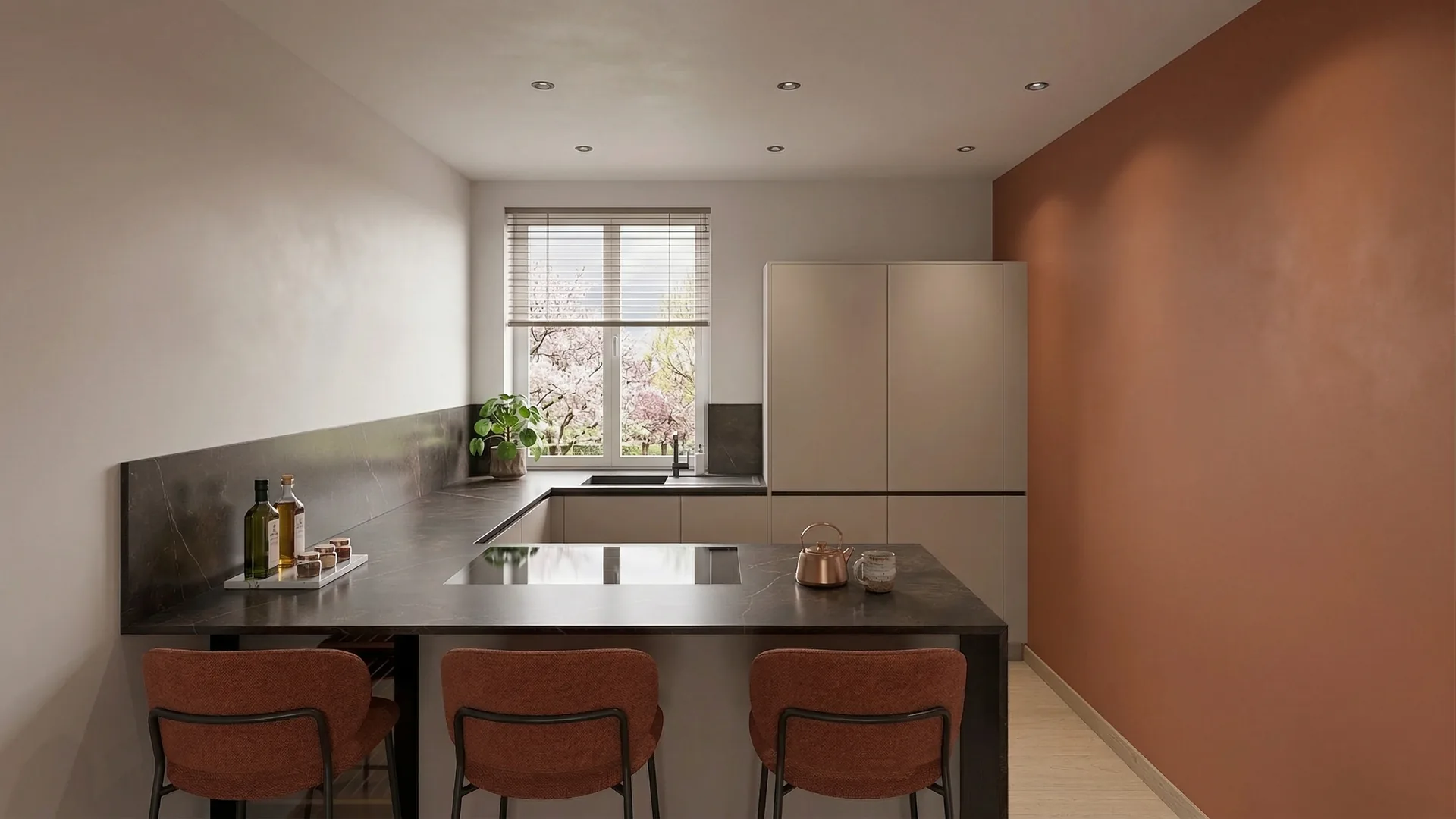
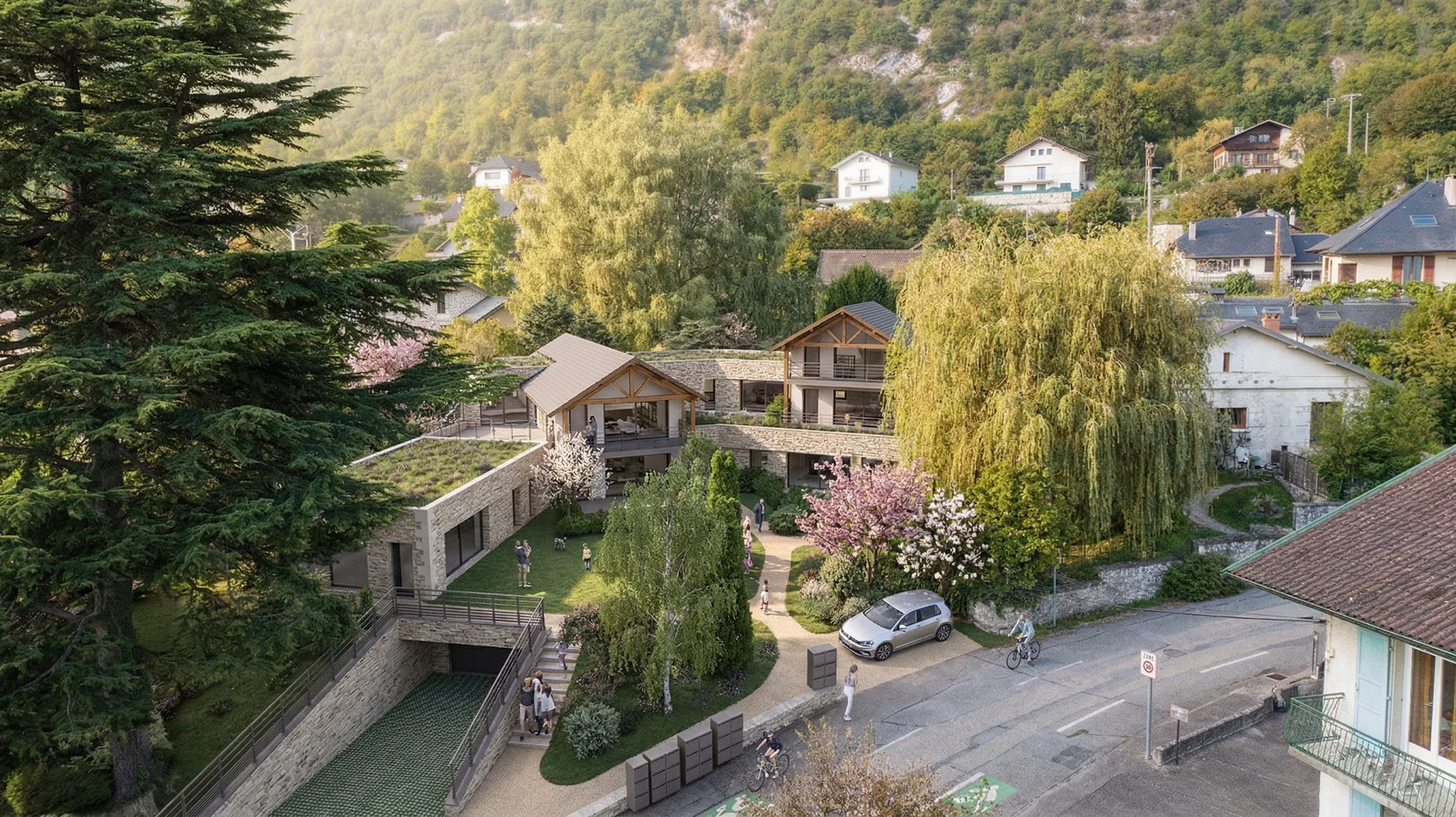
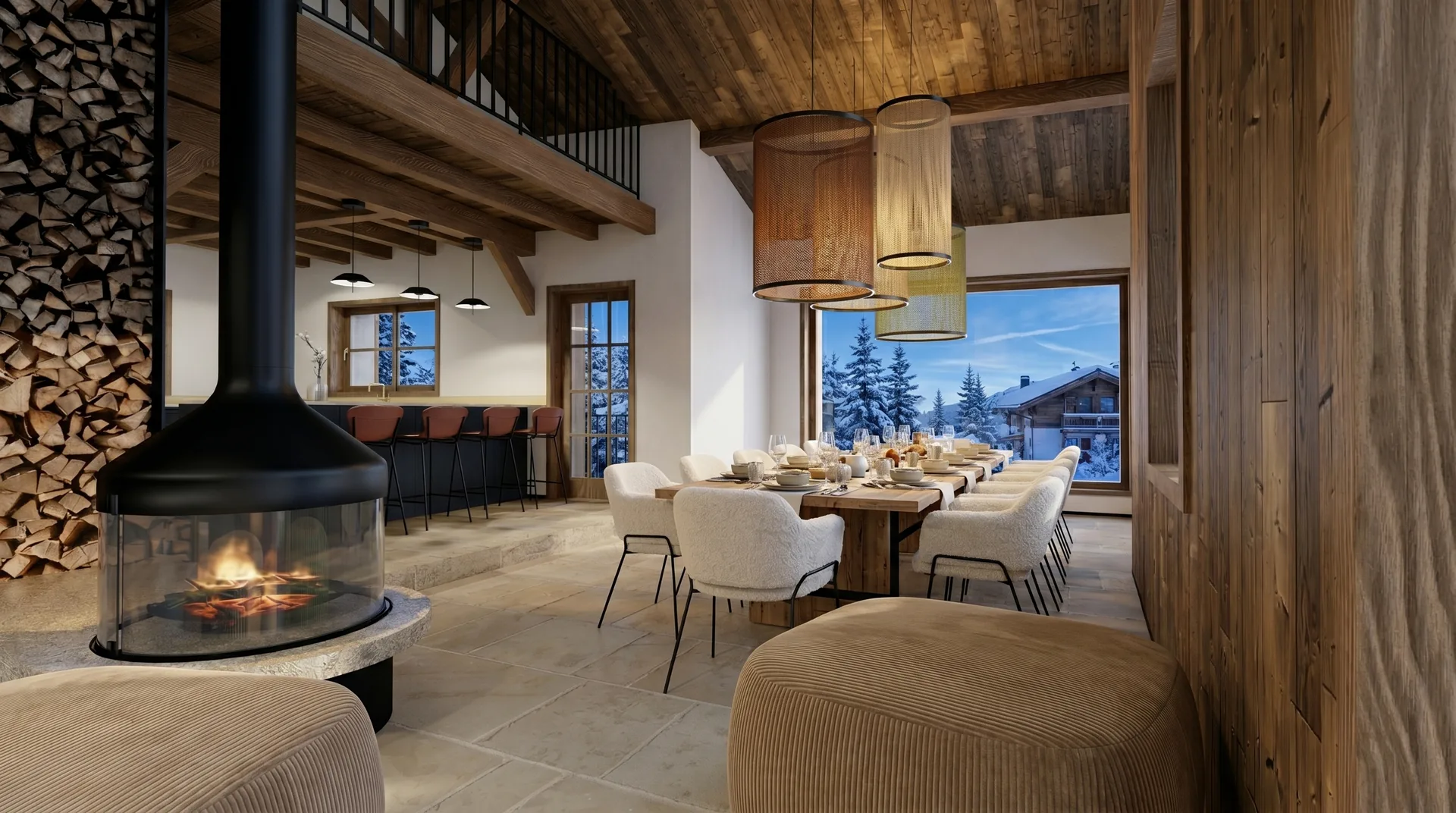
All projects →Our office is in Aix-les-Bains and we work across Savoie and Haute-Savoie. Here are some recent projects.
What we check before costing
A quote where each line carries the rate that matches its nature, and reasoning you can read back.
Age and use of the building
Home completed more than two years ago, current or future residential use: the two starting conditions for the reduced rates.
Floor area created
Extension, adding a storey, lofts: we measure the floor area added against the 10% threshold.
Extent of the renovation
Structure, façades and six finishing-trade elements: we identify early a project that might approach the rebuild-as-new thresholds.
Quote broken down by rate
Insulation, interior renovation, extension: each item is costed separately, at the rate that applies to it.
Statement to certify
The statement that replaces the certificate appears on the quote: we explain what you are certifying when you sign it.
Renovation grants
As RGE CertiRénov certified professionals, we check what applies to your situation: MaPrimeRénov', CEE, éco-PTZ.
Where we provide quotes
From our Aix-les-Bains office, across Savoie and Haute-Savoie.
Frequently asked questions · VAT on works
The right rate,
line by line.
Free visit and quote: a detailed costing item by item, with the VAT rate that matches each line.