Mould on a wall:
causes and solutions.
Black spots in the corner of the bedroom, a grey ring on the ceiling, paint turning green behind the wardrobe. Wiping them away is easy; stopping them coming back requires knowing where the water comes from. Here is how to track it down, what you can do yourself, and the work that settles the problem for good.
Recognising mould that is more than a stain
What you see and what you smell. Black, greenish or grey spots that merge into patches, sometimes with a fluffy appearance; a cellar-like smell that persists even when the room is tidied; paint that blisters, wallpaper peeling at the edges. ADEME lists black marks on walls and ceilings, blistering paint and condensation among the signs of damage from air that is too humid.
The location is already a clue. Mould in living spaces almost always settles on the coldest surfaces: the corner of two external walls, the top of the wall against the ceiling, the foot of a partition hidden by a bed or wardrobe pushed against an external wall, the area around windows, the top-floor ceiling under the roof space. The ADEME guide on air quality sums it up: it develops mainly in poorly ventilated damp rooms, on poorly insulated walls and at thermal bridges.
When it becomes a real problem. A small mark that appeared after a rainy winter, was cleaned and never came back, remains a warning. The stain that reappears a few weeks after cleaning, the one that spreads, or condensation streaming down the windows each morning say something else: the water is coming back every day. A hygrometer placed in the room settles it quickly. ADEME advises staying between 40 and 60% relative humidity; a bedroom that stays above this range day after day gives mould what it needs.
Finding the cause: five origins, five treatments
Mould is water sitting on a surface long enough for a fungus to take hold. Whether that water comes from the air in the room or from inside the wall changes the answer completely.
1. Condensation on a cold wall. Breathing, showering, cooking, drying laundry: the life of a household loads the air with water vapour. This warm air travels to the coldest surface in the room, cools there and deposits its water. It is the typical scenario of the bedroom closed at night, barely heated, where two people sleep: the stains appear in November and fade in spring.
2. The thermal bridge. Wherever the insulation stops, the wall stays cold: at the edge of a concrete floor, under a lintel, in a window reveal, behind a roller-shutter box, in a corner. The unmistakable sign: a dark, perfectly straight band along the ceiling or floor, while the rest of the wall is clean.
3. Inadequate ventilation. No VMC, air inlets blocked because they “blow cold”, a VMC switched off because of the noise, clogged vents. One case comes up often: new, airtight windows fitted without providing an air supply, as our guide on replacing windows explains. For homes built since 1982, the regulations set renewed-air flow rates through general ventilation; older buildings follow the rules of their day.
4. Missing or badly fitted insulation. Under a roof space, a compacted layer of insulation, wool pushed aside when cables were run, or a bare access hatch is enough to make a section of ceiling cold: the mould then draws patches there, sometimes the exact shape of the gap. On the walls, a lining stopping at the edge of the frame leaves the window reveal unprotected.
5. Infiltration or rising damp. A stain at the foot of a wall along its whole length, a ring stain that grows after rain, a white efflorescence that turns to powder, a render that crumbles: here the water comes from the masonry, not from the air. This case calls for a different diagnosis, detailed in our articles on water infiltration in a wall and on saltpetre, and in our overall guide damp wall: what to do.
Telling the difference without instruments
The calendar. Condensation mould follows the winter: it spreads when you heat and air little, and recedes in fine weather. An infiltration follows the rain, in any season.
The height. Top of walls, corners, behind furniture: humid air on a cold wall. Bottom of the wall along its whole length, up to a roughly even height: damp rising from the ground.
The windows. Condensation every morning on the inside signals air too laden for its walls. Our article on window condensation details this symptom.
The aluminium square. Tape a square of aluminium foil over the affected area, sealed on all four sides, and look at it after a few days. Droplets on the side facing the room: it is the air condensing. A wet face on the wall side while the other is dry: the water comes from the masonry.
The false good ideas. Painting over it, even with a paint sold against damp: paint covers the stain, not the water. Blocking air inlets or switching off the VMC: ADEME asks that an air inlet or extraction vent never be obstructed, and that the VMC be left running permanently. Leaving a bedroom unheated: ARS Auvergne-Rhône-Alpes advises the opposite, to heat in order to limit the cold areas where water settles. Relying on a dehumidifier: it removes water as long as it runs, without changing anything about the cold wall or the ventilation. Lining or insulating a wet wall: the water ends up trapped behind the board.
Mould in a bedroom: is it dangerous?
The subject is not cosmetic. In its 2016 expert appraisal on mould in buildings, Anses estimates that between 14 and 20% of homes in France have visible mould. It recognises the development and worsening of asthma, along with allergic rhinitis, as established effects.
Some people are more exposed to the risk: children from birth, people who are asthmatic, allergic or hypersensitive, people with weakened immune systems or a chronic respiratory disease, and households in fuel poverty or in an overcrowded home. A bedroom is the room where we spend the most consecutive hours; an affected child's or baby's bedroom therefore takes priority. If you have a cough, breathing difficulty or irritation that lasts, talk to your doctor.
Cleaning without putting yourself at risk
ARS Auvergne-Rhône-Alpes, which covers Savoie and Haute-Savoie, describes a simple method (page updated on 6 August 2026):
Prepare. Move furniture and objects away from the area, or cover them with plastic sheeting.
Protect yourself. Household gloves and, if possible, goggles and a mask. Only the person cleaning stays in the room, with the windows wide open.
Clean. A microfibre cloth dampened with a soapy detergent, working from the cleanest area to the dirtiest, without dipping a dirty cloth back into the clean product. Rinse with clean water using another cloth, then dry. Disposable waste goes in a sealed bag.
Disinfect, only if needed. Bleach is not mandatory. If you use it after cleaning, dilute it in cold water, never mix it with anything other than water, and stop at the slightest respiratory symptom.
Two limits to know about. Wallpaper, a soaked plasterboard sheet or colonised insulation cannot really be cleaned: Santé.fr advises replacing damaged porous materials. And ARS recommends calling a professional when the contaminated area is too large or when the water involved is wastewater. No product, however well presented, stops mould coming back if the cause remains in place.
Simple steps that are enough when the cause is how the home is used
Air the home, even in winter. ADEME recommends opening the windows for 5 to 10 minutes morning and evening, and airing during and after showering, cooking or laundry. Cover saucepans and run the extractor hood.
Let the ventilation work. Air inlets and vents kept clear, VMC on day and night, a gap under internal doors so air can pass through the home: 1 cm in general, 2 cm under the kitchen door, according to the same guide. Dust the vents regularly; ADEME recommends a full service of the VMC every year, or at least every three years.
Heat, and dry laundry elsewhere. A steady temperature avoids frozen walls. Laundry dries outside or in a well-aired room, and the tumble dryer is vented to the outside when possible.
Pull furniture away from external walls by a few centimetres, so that warm air also licks the wall they hide.
Run the test for a few weeks, hygrometer in view. If the humidity drops back to the recommended range and the stains do not return, the problem was how the home was used. If they return anyway, the cause is in the building: ventilation, insulation or water getting in.
The work that settles the problem, cause by cause
Rework the ventilation. When the air stays too humid despite the right habits, that is what needs correcting. A humidity-controlled single-flow VMC extracts air from the wet rooms and brings fresh air in through the dry rooms: the living room and bedrooms get air inlets, the kitchen, bathroom and WCs get extraction vents. On our quotes, it costs €1,600 to €2,700 excl. VAT fitted in a house, most often around €2,100. The choices between single and dual flow are detailed in our guide to VMC prices.
Warm up the walls. A cold external wall is corrected with an internal insulating lining, provided the window reveals and junctions are also treated, otherwise the mould simply moves a few centimetres. Our guide to insulating your walls from the inside explains the precautions, starting with this one: never on a wet wall. External insulation passes in front of floors and internal load-bearing walls, so it removes most thermal bridges; it is priced per square metre of façade, scaffolding extra, as our guide to the price of external insulation shows.
Redo the loft insulation. A ceiling that grows mould under an attic calls first for an inspection of the loft: remaining thickness, bare areas, hatch, uninsulated VMC ducts that condense. A blown top-up often settles the matter; the method and the thermal resistance to aim for are in our guide to insulating a loft space.
Treat the area around the windows. Insulation returns in the reveals, an insulated roller-shutter box, an air inlet built into the window or the box. If you change your windows, the quote must provide for this air supply.
Stop the water getting in. Roof, façade, gutter, pipework: until the water entry is repaired, nothing holds. Our article on infiltrations helps locate it.
Repaint last. Once the cause has been treated and the wall is dry: cleaning, filling, priming, then finish. Repainting beforehand means paying twice for the same room. Our prices per square metre are in our guide to the price of painting.
What this work costs on our quotes
These ranges are taken from our 2024-2026 quotes in Savoie and Haute-Savoie, supplied and fitted, excluding VAT. They are carried out by our salaried craftsmen, each in their own specialty: plumbers and heating engineers or electricians for the VMC, plasterboard fitters for the linings, joiners for the window air inlets, painters for the finish.
| Works | What the line includes | Price excl. VAT |
|---|---|---|
| Humidity-controlled single-flow VMC, house | unit, 3 to 5 vents, ducting, outlet through the roof or façade, commissioning | €1,600 to €2,700 (most often €2,100) |
| Vent added to an existing VMC | vent, duct, drilling, connection | €500 to €850 |
| Dual-flow VMC, house | heat-exchanger unit, supply and extraction ducting, vents | around €7,000 |
| Insulating lining of a wall | metal frame, mineral wool, vapour control layer, plasterboard, joints finished | €75 to €90/m² |
| External insulation under render | insulation and render, scaffolding excluded (€3,000 to €7,600 depending on the façade) | €160 to €190/m² of façade |
| Blown loft insulation | blown glass wool; only four projects, to be taken as an order of magnitude | €53 to €86/m² |
| Wall painting | filling, sanding, priming, finish; skim coat if the wall needs redoing | €25 to €37/m² (€26 to €40 if the wall needs redoing) |
| Ceiling painting | most often skim coat included, matt paint | €27 to €45/m² |
VAT. In a home completed more than two years ago, a humidity-controlled single-flow VMC or a dual-flow VMC compliant with the order of 4 December 2024 falls under the 5.5% rate: €2,100 excl. VAT comes to about €2,220 incl. VAT. Insulation also falls under 5.5% if it meets the technical criteria of the regulations. Painting is at the 10% rate.
What we do not do. We do not sell an “anti-mould” treatment on its own, nor dehumidifiers: without work on the cause, we would be charging you for a stain that will come back.
Tenant or owner: who must act?
What the landlord owes. Decree No. 2002-120 of 30 January 2002 on decent housing, as summarised by service-public.gouv.fr, requires a home protected against water infiltration and rising damp, with adequate ventilation and ventilation devices that provide an air renewal and removal of humidity suited to normal occupation, plus an installation allowing normal heating.
What the tenant owes. Routine maintenance: cleaning the air inlet and extraction vents, having the ventilation ducts swept, including that of the VMC. And normal use: airing, heating, not blocking the ventilation.
So who is responsible? Whoever the cause falls to. A lack of ventilation, a thermal bridge or an infiltration belong to the home; blocked air inlets or a VMC switched off belong to how it is used. When each blames the other, an on-site report that names the cause moves faster than an exchange of letters.
The tenant's steps. Service-public.gouv.fr recommends reporting the problem to the landlord in writing, preferably by registered post with acknowledgement of receipt, not stopping rent payments, then sending a formal notice (mise en demeure) if nothing happens. Conciliation is free, before the departmental conciliation commission or a court conciliator. After two months without a reply or in case of disagreement, the judge for protection disputes (juge des contentieux de la protection) can order the work and reduce or suspend the rent. Depending on the département, Signal Logement also allows you to alert State services, and your département's ADIL can advise you.
Are you a landlord whose tenant has reported mould? We can come and identify the cause and price the work that eliminates it.
Mould on the ceiling: what about insurance?
The water damage cover of home insurance applies when the water comes from a covered event: a leak or overflow from a pipe or appliance, infiltration through the roof, a blocked gutter. Mould on a ceiling below the flat above or beneath a leaking roof can therefore be covered. The Institut national de la consommation points out, however, that damage linked to condensation, damp or porosity is generally excluded, as is repairing whatever caused the loss. The reporting deadline is set by the policy and cannot be shorter than 5 working days: read your policy's exclusion clause and report quickly.
And in the bathroom?
The bathroom receives the steam of every shower and every bath, and its mould has its own culprits: tile grout, silicone around the shower or bath, the ceiling above the shower, an extraction vent that is too weak. We devote a separate article to them: mould in the bathroom.
Renovations carried out by our teams
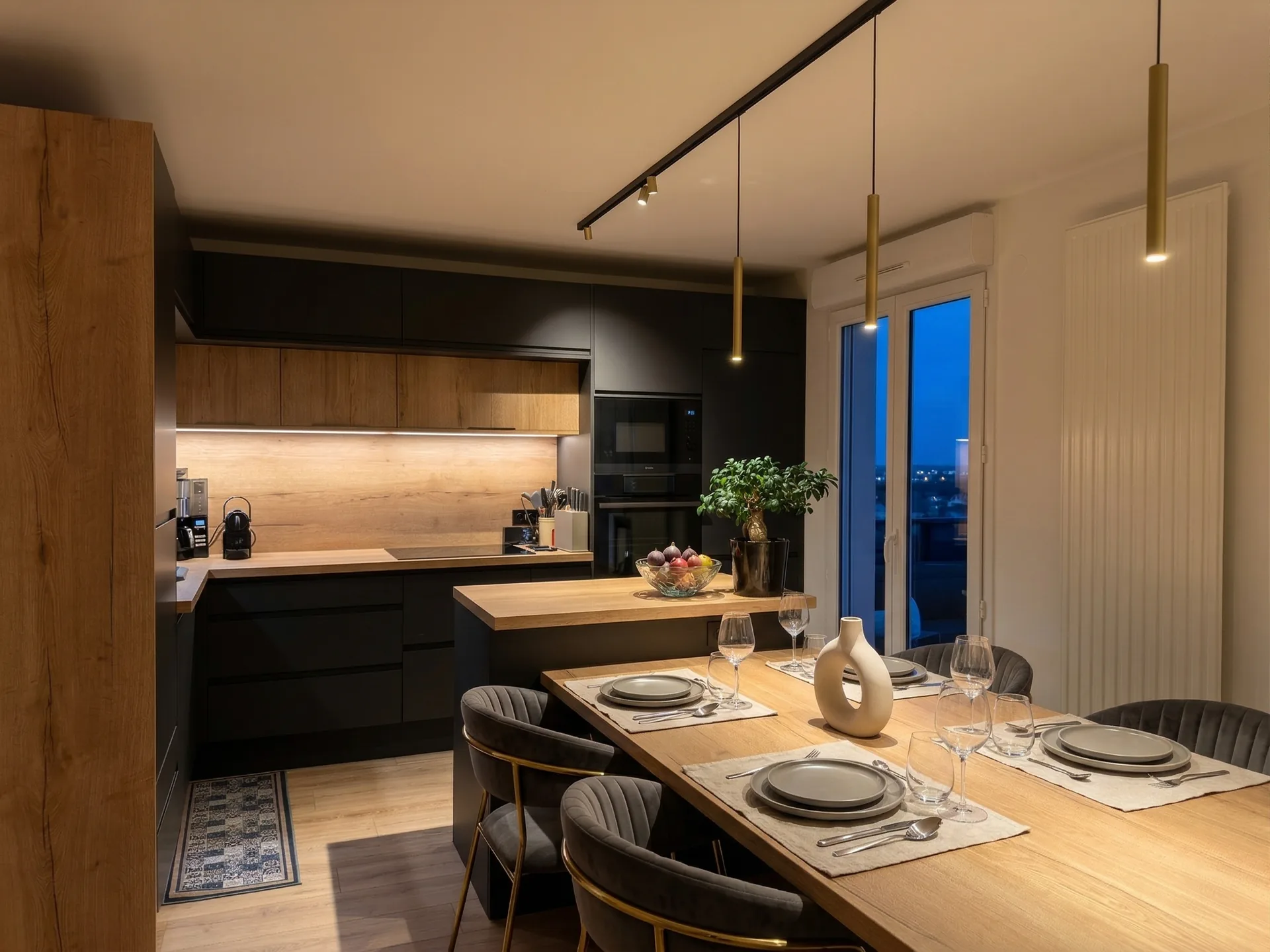
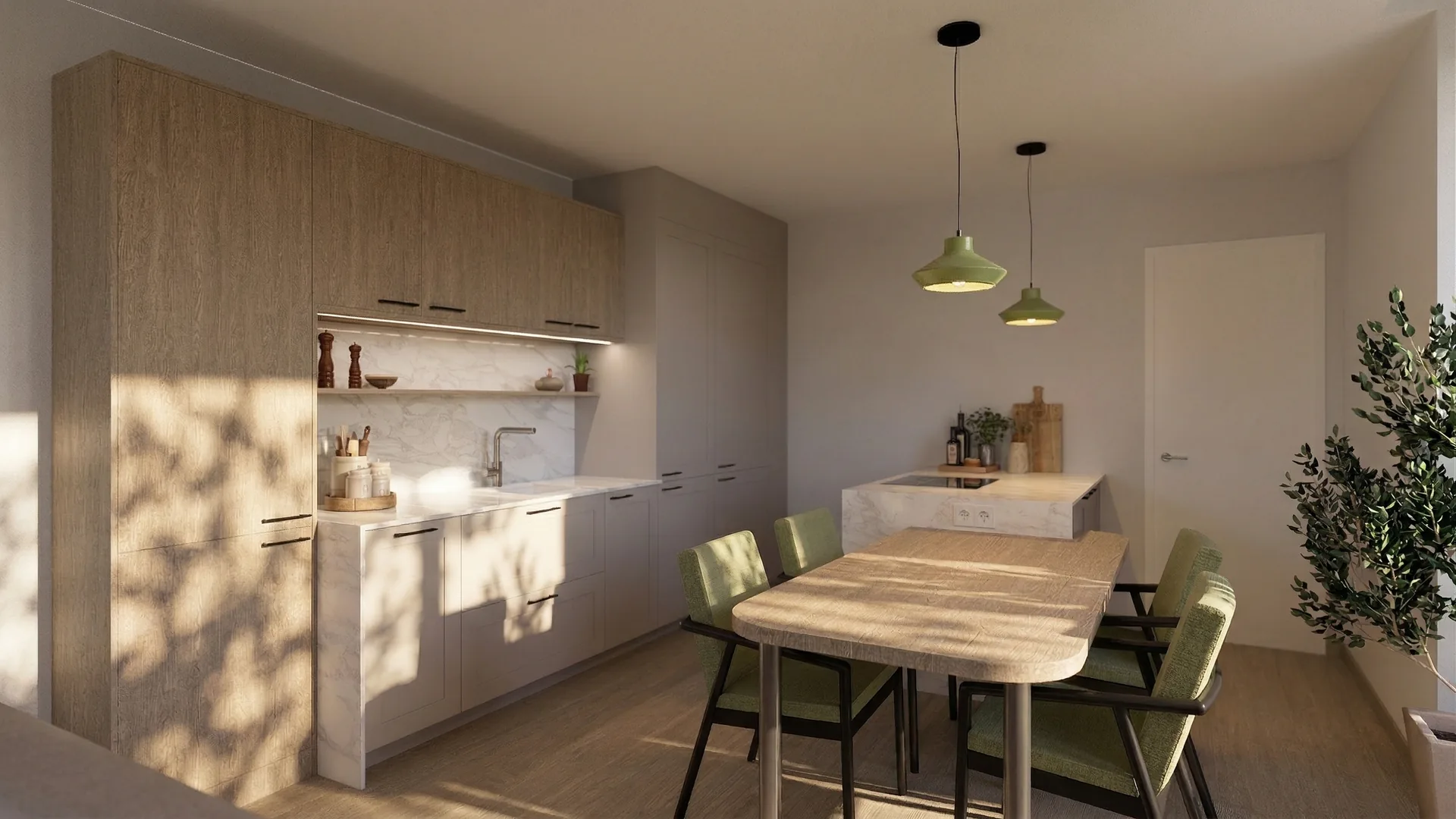
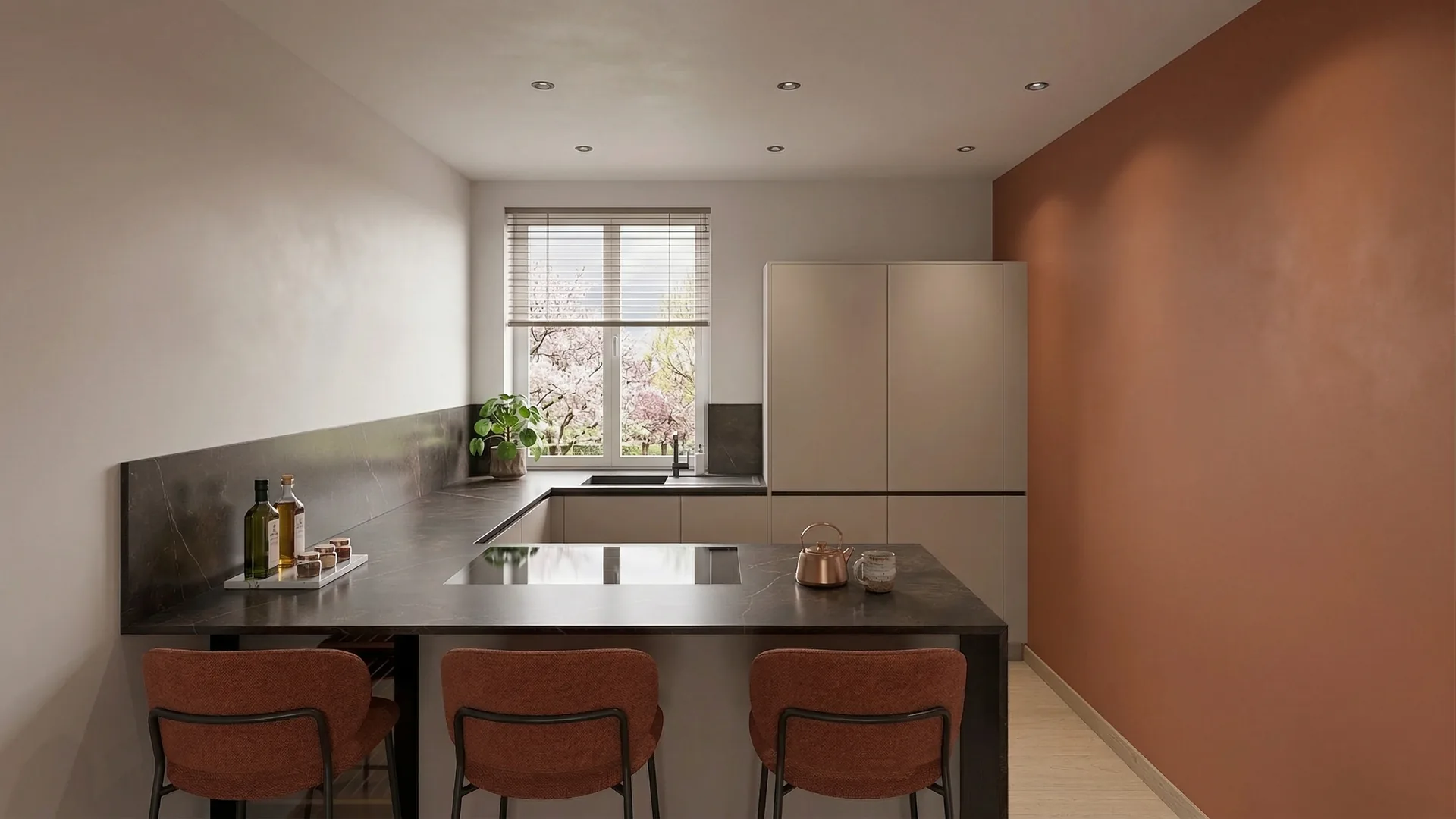
All projects →Flats and houses renovated from Aix-les-Bains to Chambéry and north of the Lac du Bourget: ventilation, insulation and finishes in the same project.
When to call us, and what the quote should say
Mould that resists the right habits has a cause in the building. A serious quote starts by naming it.
The stain returns
After a few weeks of regular airing and heating, it is still there: how the home is used is not the only factor.
It follows building work
Windows changed, insulation fitted, chimney blocked up: the air renewal that existed before has disappeared and must be rebuilt.
Ceiling under the roof space
Dark patches on the top-floor ceiling: the loft insulation must be checked before any painting.
A cause in writing
The quote states what causes the damp: condensation, thermal bridge, ventilation, insulation, infiltration. Without that, it treats a symptom.
Detailed ventilation
Type of VMC, number and position of vents, air inlets in the dry rooms, discharge outlet, routing of the ducts.
Paint last
Drying, priming, finish, after the work on the cause. A quote that only offers to repaint settles nothing.
Find out more
- Spotting and fixing a thermal bridge
- Damp walls: what to do?
- Condensation on windows
- Mould in the bathroom
- Water infiltration in a wall
- Saltpetre on a wall
- Price of a fitted VMC
- Insulating your walls from the inside
- Insulating unconverted lofts
- Cost of painting per m²
- Replacing your windows
- Our teams
- Request a visit
Where we come to look at your walls
Visit, cause investigation and quote from Aix-les-Bains, across both Savoie departments.
Frequently asked questions · Mould on walls
First the cause,
then the paint.
Free visit and quote: we look for where the water comes from, then we price the work that stops it, item by item.