Mould in the bathroom:
causes and solutions.
Grout going black, a grey stain on the ceiling above the shower, silicone speckled with black dots: bathroom mould can be cleaned, but it comes back as long as its cause remains. Most often, it is one of these four: extraction that does not pull, a room without a window, a shower leaking behind the tiles, a cold wall. Here is how to recognise them, what you can do yourself, and what the work costs on our quotes.
What you see, and when it becomes a real problem
In a bathroom, mould always settles in the same places, and each one says something about its cause.
Tile grout turns grey then black, first at the bottom of the shower, where water stands longest.
The silicone bead around the shower tray or bath becomes speckled with black dots. When the black is in the body of the sealant rather than on the surface, no product will remove it.
The ceiling above the shower and the corners at the top of the walls become covered in grey or black stains; the paint blisters or flakes.
The bottom of the walls behind the bath or beside the shower: a skirting board or board that swells, tiles that sound hollow, a musty smell that persists even when the room is aired.
A few black dots on grout, cleaned regularly, are a matter of upkeep. The problem is real when the mould returns a few weeks after a thorough cleaning, when the stain spreads, or when it appears away from water splashes: at the foot of a wall, in the next room, on the ceiling of the floor below.
It is not only a matter of appearance. In 2016 ANSES confirmed proven effects of mould exposure on respiratory health: development or worsening of asthma, allergic rhinitis. Infants, people with asthma or allergies, weakened immune systems or a chronic respiratory disease are the most sensitive. If someone coughs or wheezes in the home, talk to your doctor, and treat the cause without delay.
Finding the cause: four leads and how to tell them apart
Before buying a product or repainting, look at where the mould is and when it progresses. This observation is often enough to point to the culprit.
1. Humid air does not get out. A hot shower fills the room with steam; if nothing draws it out, it settles on the coldest surfaces — ceiling, corners, mirror — and feeds the grout. Three faults come up again and again: a clogged extraction vent that barely pulls any more, no vent at all in an old bathroom that relies only on its window, a door with no gap at the bottom. The order of 24 March 1982 on ventilation in dwellings provides that air enters through the main rooms, leaves through the service rooms, including the bathroom, and circulates freely from one to the other: with the door closed and no air path, the vent draws on nothing. The test: with the ventilation running, hold a sheet of paper near the vent. If it does not move, the extraction is not working or the vent is blocked. Another clue: fog that stays on the mirror a long time after the shower.
2. The room has no window. In flats, many bathrooms are in the heart of the home. All the steam must then leave through the vent or the extractor: at the slightest fault, mould takes hold, generally on the ceiling and in the high corners. Conversely, a window does not replace extraction: in winter, it is rarely opened for long enough.
3. Water gets behind the tiles. Wall tiles and their grout are not watertight. Without a waterproofing system beneath, or with a cracked shower-tray joint, the water from every shower soaks the partition or the floor. It is the typical fault of badly built walk-in showers. The signs differ: mould at the bottom of the wall on the shower side rather than on the ceiling, grout that blackens from within, tiles that sound hollow, a skirting board that swells on the other side of the partition, a ring stain on the ceiling below. The test: do not use the shower for a few days, see whether the stains fade, then whether they return after a few showers. A company specialising in leak detection can confirm where the water is coming from.
4. The wall is cold. An uninsulated external wall, a corner under the roof, a window reveal: steam condenses on the coldest surface in the room. The mould then traces the shape of the cold — a corner, a band at the top of the external wall — while the internal partition stays clean. It is the same mechanism as condensation on glazing, explained in our article on window condensation.
If the stains spread beyond the bathroom, into a bedroom or onto the living room walls, the problem goes beyond the wet room: read our article on mould on a wall and the guide damp wall: what to do, which helps tell condensation, infiltration and rising damp apart.
The mistakes that make mould return
Painting over it. Even when sold as “anti-mould”, a paint only masks for a few months what the steam or the leak continues to feed.
Covering blackened silicone with a new bead: the mould stays underneath and comes back through.
Blocking the extraction vent or the air inlets because they are noisy or cold. That closes the only exit for the steam; ARS Auvergne-Rhône-Alpes reminds us never to obstruct them.
Relying on a dehumidifier alone. It removes water from the air, but does not fix faulty extraction, a leak or a cold wall.
Mixing products. Bleach is diluted in cold water and mixed with nothing else. Scrubbing hard and often does not repair grout that has become porous.
What you can do yourself
Cleaning without exposing yourself. The advice from ARS Auvergne-Rhône-Alpes is simple: gloves, and if possible goggles and a mask; one person only in the room, window wide open; a damp microfibre cloth and a soap-based household detergent, working from the cleanest area to the dirtiest; rinsing with clean water, then drying. Bleach can be used, diluted, stopping at the slightest respiratory discomfort. Disinfection after cleaning is rarely necessary.
Shower grout. A stiff brush is enough for cleaning. If the grout stays black after two or three passes, the mould is in the grout itself: it has to be scraped out and redone with a grout mortar suited to wet rooms. This is feasible on a section of wall, time-consuming on a whole shower.
The silicone. No point persisting. Cut the old bead with a utility knife, remove the residue, clean, let it dry completely — a bead applied to a damp surface lifts and blackens quickly — then redo the joint with sanitary silicone.
The ceiling. Same method, without soaking the plaster. If the paint is flaking, do not repaint straight away: first fix the extraction, then check for a few weeks that the stain does not return.
Steps that limit its return. Run the extraction during the shower and for a few minutes afterwards, or open the window at the end of the shower; wipe the walls and grout after use; spread out the shower curtain so that it dries; dry laundry somewhere other than the bathroom. Also clean the grille of the extraction vent, following its manufacturer's instructions.
The work, from the simplest to the heaviest
Restoring the extraction. If the door has no gap at the bottom, undercutting it — planing the bottom of the leaf — or fitting a transfer grille restores an air path; none of our quotes prices this small job separately, so we give no price. If the bathroom has no vent, we connect one to the existing VMC: on our quotes, an added vent costs €500 to €850 excl. VAT, duct, drilling and connection included. If the home has no mechanical ventilation at all, a VMC must be fitted: a type B humidity-controlled single-flow unit comes to between €1,600 and €2,700 excl. VAT fitted in a house, most often around €2,100 excl. VAT for three to five vents. The detail, dual flow included, is in our guide to VMC prices.
Redoing walls and ceiling with wet-room materials. Once the cause is resolved, the damaged substrate is made good. In a bathroom, our plasterboard fitters install moisture-resistant boards for partitions, linings and the ceiling: on our quotes, they cost €8 to €10 excl. VAT more per m² than a standard board. The ceiling is skim-coated then receives an acrylic paint, as in other rooms: €27 to €45 excl. VAT/m² on our quotes, detailed in our guide to the price of painting. Our quotes contain no “anti-mould” paint line: on a sound, dry substrate, with working extraction, it is not necessary; on a wall that stays damp, no paint holds.
Redoing the waterproofing under the tiles. When water gets behind the shower tiles, redoing the grout is not enough. The tiling in the shower area must be removed, the damaged substrate left to dry or replaced, a waterproofing system under tiles (SPEC) laid, then new tiles. On our quotes, the SPEC alone is about €500 to €700 excl. VAT for a shower area; the tiles, shower tray and plumbing are added on, item by item, in our guide to the price of a walk-in shower.
Treating the cold wall. A bathroom backing onto an uninsulated external wall is treated with internal wall insulation, with careful vapour management. Better to decide on it before redoing the tiles than to have to break up a new bathroom.
Redoing the bathroom. Some rooms can no longer be repaired in pieces: no waterproofing under the shower, swollen boards behind the tiles, a timber floor affected under the shower tray, tiling coming loose. A localised repair then leaves in place what caused the damage. For a wet room of about 5 m² completely redone, our item-by-item prices give about €7,600 to €13,800 excl. VAT, or €8,400 to €15,200 incl. VAT at 10%, providing from the outset for extraction, moisture-resistant boards and waterproofing. All the steps are in our guide renovating your bathroom.
Our prices, taken from our quotes
Taken from our 2024-2026 quotes in Savoie and Haute-Savoie, prices excluding VAT and rounded. VAT is in principle 10% in a home completed more than two years ago; it drops to 5.5% for a humidity-controlled or dual-flow VMC that meets the criteria, as our guide to VAT on renovation work explains.
| Item | What the line includes | Price excl. VAT | Projects |
|---|---|---|---|
| Extraction vent added | vent, duct, drilling and connection to the existing VMC | €500 to €850 | 2 |
| Type B humidity-controlled single-flow VMC fitted, house | unit, three to five vents, ducting, outlet, commissioning | €1,600 to €2,700 | 10 |
| Moisture-resistant boards | extra cost over a standard board, bathroom walls and ceiling | €8 to €10/m² | 8 |
| Ceiling paint | skim coat most often included, acrylic paint | €27 to €45/m² | 48 |
| Waterproofing under tiles (SPEC) | whole shower area, lump sum | €500 to €700 | 6 |
This table does not contain everything. Our quotes have no line for redoing grout or silicone alone, nor for undercutting a door: we give them no price rather than invent one. Leak detection falls to specialised companies.
When to bring in a professional, and what to read in the quote
Call us when the mould returns despite cleaning and the right habits, when tiles sound hollow or a stain appears in the next room or at the downstairs neighbour's, when the affected area is large, or when a vulnerable occupant lives in the home. ARS also recommends a professional if the mould comes from wastewater.
Are you a tenant? The decree of 30 January 2002 on decent housing requires that the opening and ventilation devices be in good condition and allow air renewal and removal of humidity. A vent that is out of order or missing should be reported to the landlord, in writing.
In the quote, check that the cause is named, not only the symptom; that the extraction is described (vent, connection, air path under the door); that the SPEC appears in so many words for the shower area; that the boards are moisture-resistant; that preparation of the substrate is detailed before painting. A quote that only offers to “treat and repaint” a bathroom that has been mouldy for years treats the symptom.
Our projects around the lake
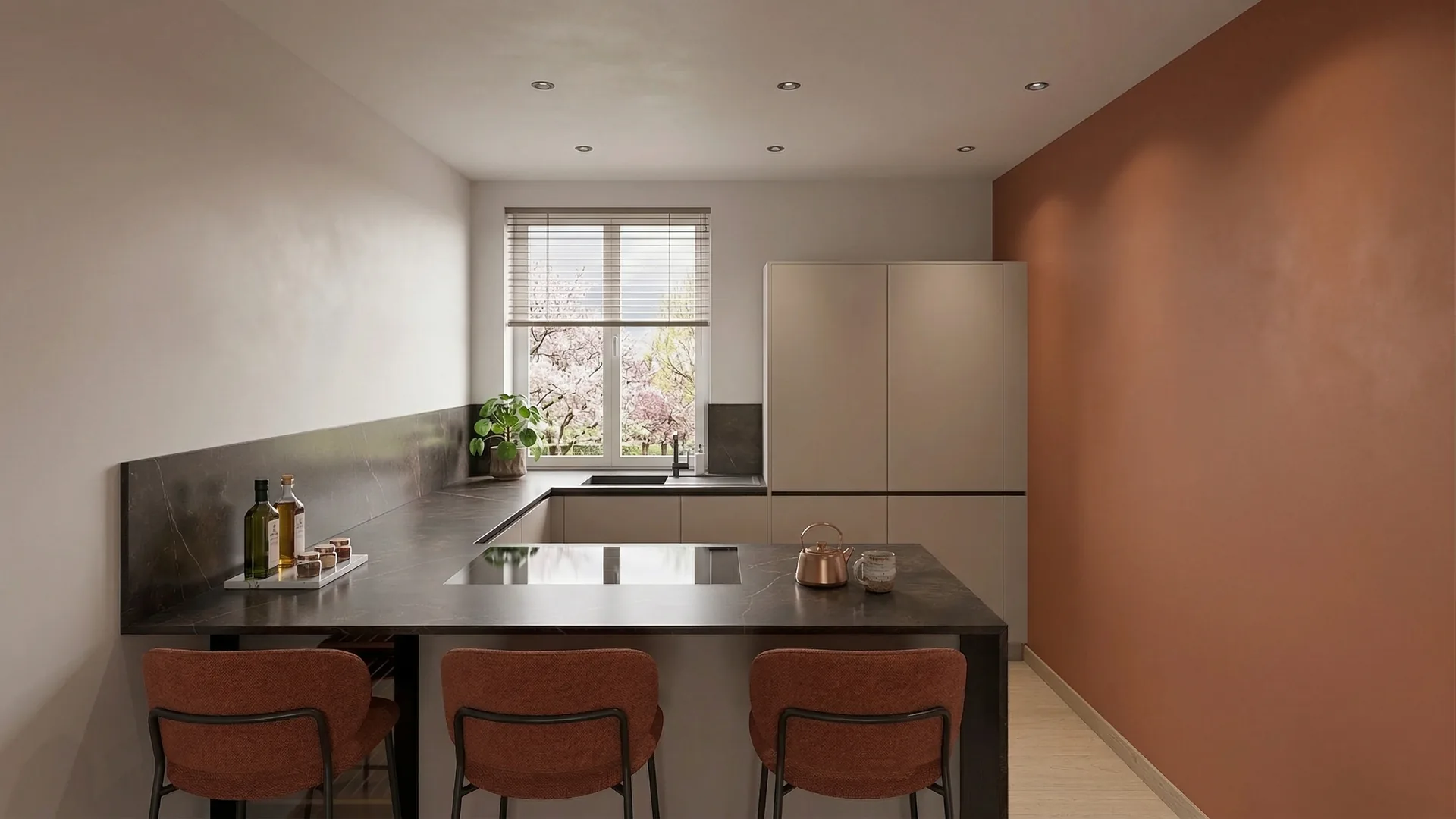
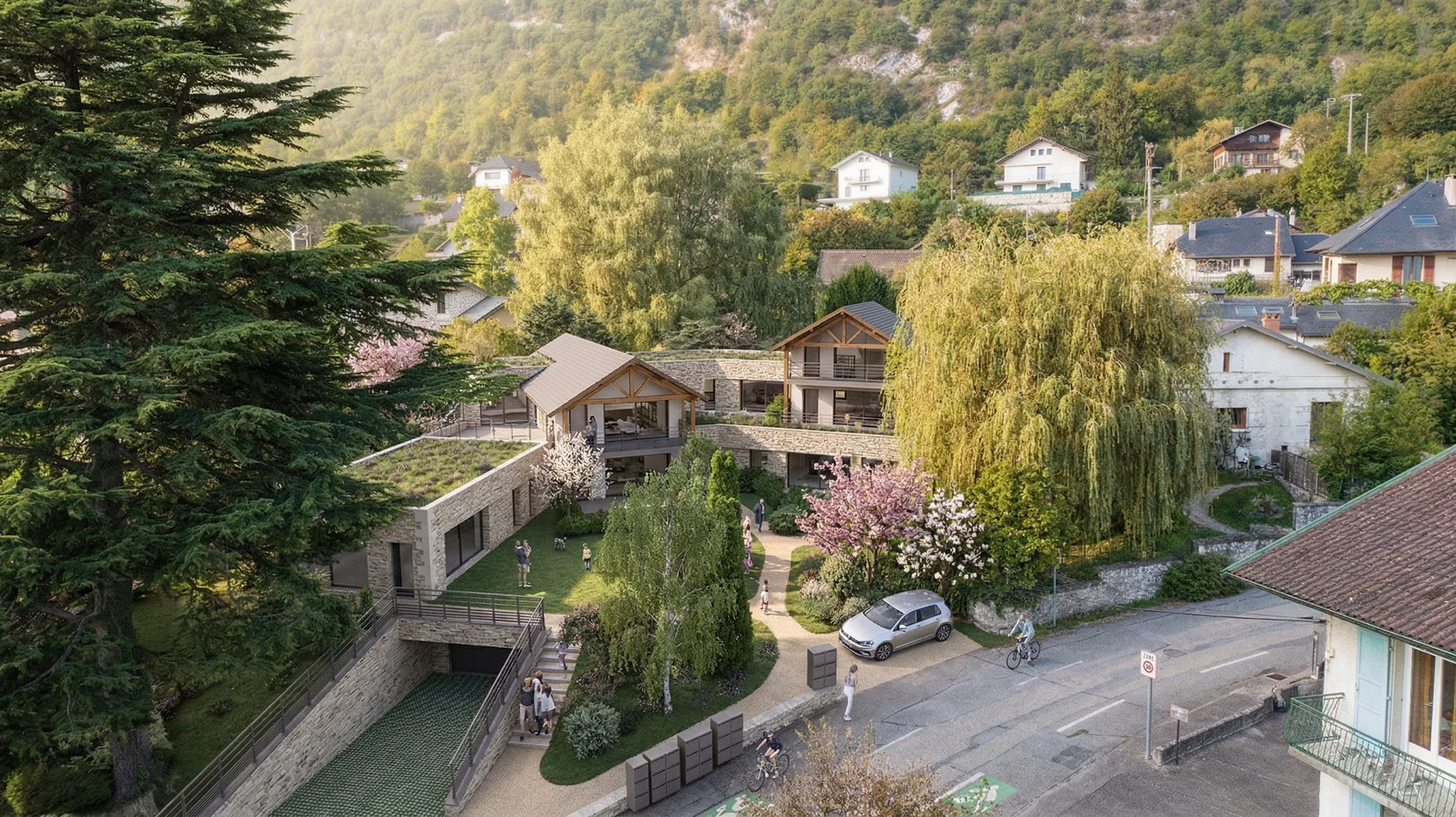
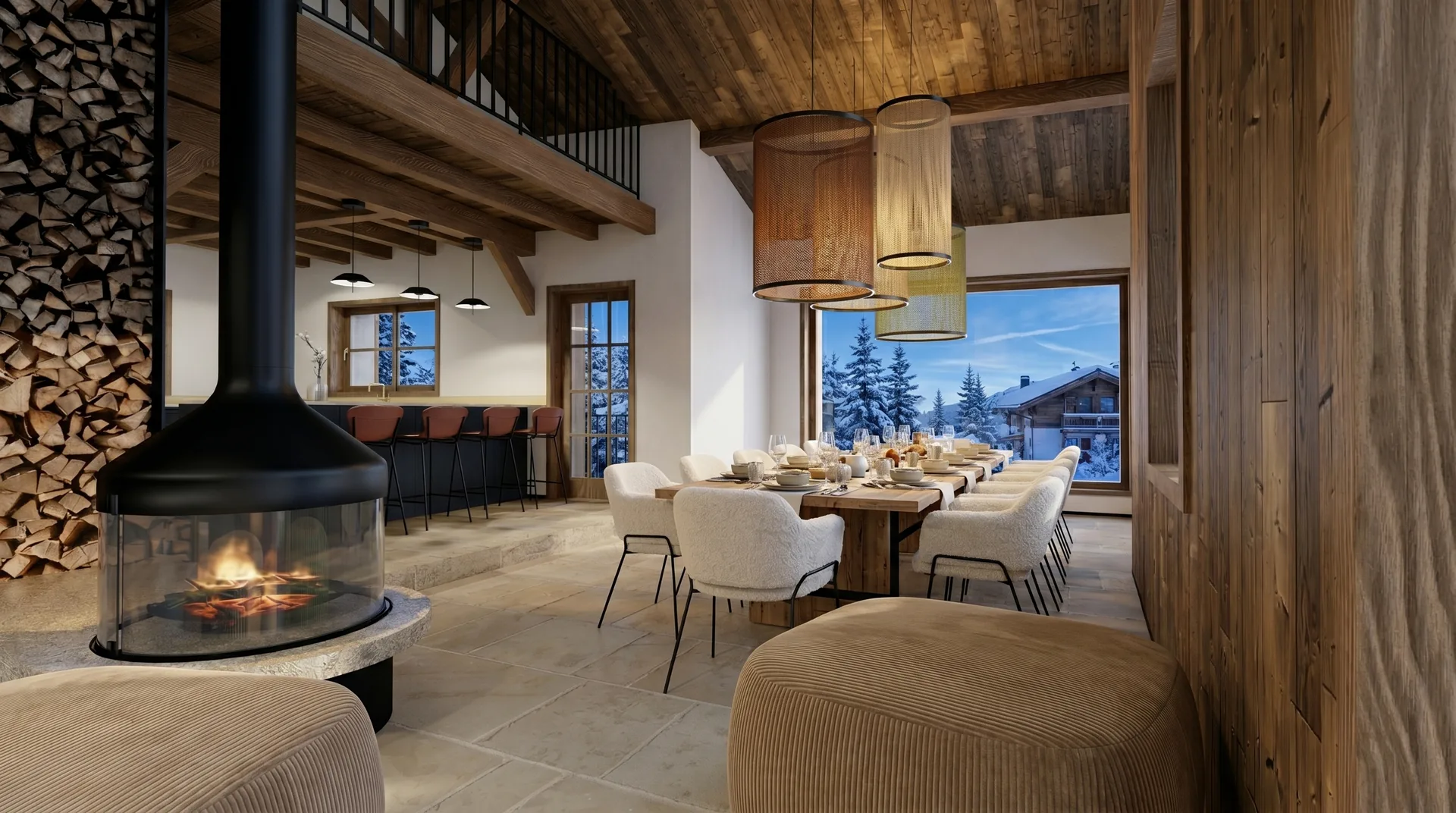
All projects →From our Aix-les-Bains office, our sites stretch from the shores of Lac du Bourget to the Val d'Arly. Here are some recent projects.
What our teams do
A mouldy bathroom involves several trades: with us, it is our salaried craftsmen, each in their own specialty.
Survey and assessment
Vent, door, window, condition of the grout, tiles sounded, partition and the room below: the cause is sought before pricing.
Ventilation
Vent connected to the existing VMC or a new VMC, commissioning and adjustment included.
Plastering
Partitions, linings and ceiling in moisture-resistant boards; boxing-in of the ventilation ducts.
Waterproofing and wall tiling
SPEC across the whole shower area before tiling, then new wall tiles and grout.
Painting
Skim coat and paint on the walls and ceiling, once the substrate is dry and the cause treated.
Insulation
External wall insulated from the inside when it is the one making the moisture condense.
Where we work
Bathroom diagnosis and quotes provided from our offices in Aix-les-Bains and Annecy, across the two Savoie départements.
Frequently asked questions · Mould in the bathroom
Find the cause,
then treat it.
Free visit and quote: we look at the ventilation, the grout and the waterproofing before putting a price on anything, and the work is carried out by our own teams.