Glass wool
or rock wool?
These are two mineral wools, and the data sheets of the products we fit show that at equal thickness they can insulate exactly as much. What separates them lies elsewhere: fire resistance, mass, the way they are fitted, and where in the house they go. Here is the comparison, backed by manufacturers' figures and the prices from our quotes.
Two mineral wools, two starting materials
Glass wool is made from sand and recycled glass, melted then drawn into fibres. Rock wool starts from a volcanic rock, basalt. Both belong to the mineral wool family, found in lofts, roof slopes, walls and floors.
On site, the difference is felt first by hand: the rock wool boards we fit are firmer, with a density of 32 to 65 kg/m³ depending on the model, according to Rockwool data sheets. On paper, it can be read in four lines of the data sheet: thermal conductivity λ, density, reaction to fire and facing, bare or kraft.
Rather than compare "the" glass wool with "the" rock wool, we compare these four lines below, product by product, on the references that come up in our quotes.
Thermal insulation: compare the product's λ, not the family
The thermal resistance R of a layer of insulant, the one that governs grants, is obtained by dividing its thickness by its conductivity λ. Two products with the same λ therefore give the same R at equal thickness, whether they are glass or rock. Manufacturers' data sheets confirm it:
| Product (fitted on our projects) | Wool | λ (W/m.K) | R at 120 mm | R at 140 mm |
|---|---|---|---|---|
| GR 32 Nu (Isover) | glass | 0,032 | 3,75 | 4,35 |
| Rockplus Premium (Rockwool) | rock | 0,032 | 3,75 | 4,35 |
| Rockmur (Rockwool) | rock | 0,035 | 3,40 | 4,00 |
Sources: Isover data sheets (GR 32 Nu, updated 24/03/2026, ACERMI certificate 02/018/098) and Rockwool (Rockplus Premium and Rockmur, January 2026, ACERMI certificates 18/015/1333-1335 and 02/015/021-025).
The table mainly shows the gap within a single family. At 120 mm, Rockmur stays at R = 3.40, below the 3.7 threshold used for grants on walls; its data sheet only reaches it at 130 mm (R = 3.70). The GR 32 and the Rockplus Premium get there from 120 mm. The detail of this threshold and of the thicknesses is in our guide to insulating walls from the inside.
In lofts, the gaps are even more marked: the Comblissimo blown glass wool, specified in several of our quotes, shows λ = 0.046 on its Isover data sheet, against 0.032 for the best-performing wall boards in the table: a much greater thickness is therefore needed for the same resistance. The practical rule does not change: ask for the exact reference and its ACERMI certificate, which is what guarantees the stated λ and R.
Fire: A1 for both, provided they are bare
Without facing, both wools are classed A1, the best reaction-to-fire class in the Euroclasses: this is the case for the GR 32 Nu at Isover, which its data sheet presents as non-combustible, as for the bare Rockmur and Rockplus Premium at Rockwool.
The facing changes things. Kraft-faced versions, very widespread because kraft acts as a vapour barrier, no longer benefit from this classification: Rockwool states "performance not determined" for its kraft boards, and Isover classes its kraft-faced rolled GR 32 as F. On a quote, "rock wool" is therefore not enough to guarantee a non-combustible insulant: you have to read "bare" or "kraft".
At very high temperature, however, rock wool stands out: Rockwool states a melting point of over 1,000 °C. This is why it is found in fire-stopping details. In our external insulation systems in polystyrene, our quotes also include sections in rock wool under the render. Around a flue, it is the flue's instructions and technical approval that set the distances and materials: we apply them case by case.
Acoustics: wool is not everything
Both wools absorb airborne noise well — voices, television, music — as their fibres damp the air vibrating in the wall. Isover states for its GR 32 Nu, fitted as a lining with the Optima system, a gain of 12 to 26 dB compared with the uninsulated wall; Rockwool highlights the density of its Rockplus Premium, 65 kg/m³, for acoustic comfort.
These figures apply to a complete system: frame, plasterboard, joint treatment, electrical boxes well sealed. Between two bedrooms, our quotes most often include a 72/48 partition with glass wool between the studs. When the stakes are higher, bedroom against living room or a party wall, we work on the make-up of the partition, number of boards and type of frame, as much as on the wool.
Moisture and vapour: the same rule for both
On their data sheets, both wools show a vapour resistance factor μ of 1: they let water vapour through almost like air. They hardly absorb liquid water, but a wool in which the house's vapour condenses insulates less well for as long as it stays damp.
The consequence is identical for glass and rock: on the heated side, a membrane is needed that restrains vapour, continuous and taped at the joints. On our linings, our quotes include a humidity-variable vapour-control layer with adhesive tape; the kraft of faced boards acts as a supplementary vapour barrier, provided its strips are butted tightly together. This point is decisive under a roof: we go into it in our guide to insulating your roof from the inside.
Settlement and long-term performance
As semi-rigid boards held between a frame and a plasterboard sheet, neither glass wool nor rock wool has any reason to sag. Rockwool highlights the density of its Rockplus Premium to guarantee the absence of settlement.
In blown unconverted lofts, the question arises differently: a wool in flakes settles a little after installation. Blown products are therefore certified with a minimum installed thickness for each target resistance, and a settlement class: Isover's Comblissimo, for example, is classed S1 (ACERMI certificate 07/D/18/474). On your quote, check two values: the installed thickness and the quantity of wool per m², which the company must be able to justify from the product data sheet. The thresholds to reach are in our guide to insulating unconverted lofts.
Summer comfort: mass helps, but it is no miracle
In winter, only R counts. In summer, under an exposed roof, what protects attic rooms is the insulant's ability to delay the entry of heat, and that depends mainly on its mass. The densest rock wools have an advantage here: Rockwool states about 10 hours of time lag (déphasage) for a double layer of 140 + 120 mm of Rockplus Premium at 65 kg/m³. This is manufacturer data, for a specific build-up.
A light wool, whether glass or rock (Rockmur weighs 32 kg/m³), provides clearly less. For converted lofts facing due south, we therefore compare dense rock wool with bio-based insulants. The choice of insulant, across all families, is covered in our guide which insulant to choose.
What our quotes say about fitted prices
Here are the prices taken from our 2024-2026 quotes in Savoie and Haute-Savoie, one value per quote, supply and fitting included. These are orders of magnitude, not a price list: each project is priced after a visit.
| Work carried out by our teams | Wool | Price excl. VAT per m² | Quotes reviewed |
|---|---|---|---|
| Wall lining on a frame, 120 to 140 mm, plasterboard included | glass (GR 32) | €80 to €85 most often (extremes €72 and €95) | 21 |
| Wall lining on a frame (Optima system), plasterboard included | rock | €83 to €90 | 8 |
| Ceiling under the loft, wool rolled out at 400 mm above the plasterboard | glass (Isoconfort 35) | €105 to €115, around €110 | 12 |
| Roof slope, two layers between and under rafters, plasterboard included | rock | €108 to €115 | 4 |
| 72/48 partition with wool between the studs | glass | €65 to €75 | 7 |
| Blowing in unconverted lofts | glass | €55 to €65 (order of magnitude) | 2 |
First reading: the choice between glass and rock makes little difference to the fitted price. Our two linings come to around €83 excl. VAT per m², because the frame, the plasterboard and the fitting are the same. What makes the bill vary is the target thickness, the area and the difficulty of access.
Two limits, to be stated frankly: blowing appears in only four of our quotes, two of them in unconverted lofts, and none uses blown rock wool. We therefore do not publish a more precise range for these cases.
VAT is 5.5% for the thermal insulation of a home completed more than two years ago, and 10% for a partition wall: the conditions are in our guide to VAT on renovation work.
Which wool for which part of the house
Unconverted lofts. Both can be blown or rolled out. What counts is the resistance reached, R ≥ 7 for energy savings certificates, and the thickness actually installed.
Roof slopes and converted lofts. Boards or rolls between and under rafters, with a continuous vapour-control layer. If summer heat is an issue, a dense rock wool or a bio-based insulant is justified.
Walls from the inside. Semi-rigid boards at λ = 0.032, glass or rock, make it possible to reach R = 3.75 at 120 mm and to limit the floor area lost.
Ground floors. The technique depends on what is underneath, crawl space, cellar or garage: it is the substrate that decides, as we explain in our guide to insulating a ground floor.
Interior partitions. Ordinary glass wool is usually enough; the make-up of the partition matters more than the wool.
Near a heat source. Bare rock wool, classed A1 and melting above 1,000 °C according to Rockwool, respecting the distances set by the flue or appliance manufacturer.
Grants: the material changes nothing, the resistance does
No grant favours one wool over the other: energy savings certificates look at the thermal resistance reached and the company's qualification. Since 1st September 2026, MaPrimeRénov' no longer funds insulation as a flat-rate single measure (order of 25 August 2026): it now counts only within a major renovation.
Our RGE CertiRénov certification (no. CR-2026-73-0095) covers the whole-home renovation offer, not a single measure. For an insulation project, we check with you, at the quote stage, which grants can actually be claimed.
Who fits our insulants
It is our salaried plasterboard fitters who install the frame, the wool, the membrane and the plasterboard, all in the same package. The real performance of insulation depends on its continuity, with no gap between boards and no torn membrane around a socket: it does not depend on a handover between several different contractors.
Our projects around the lake
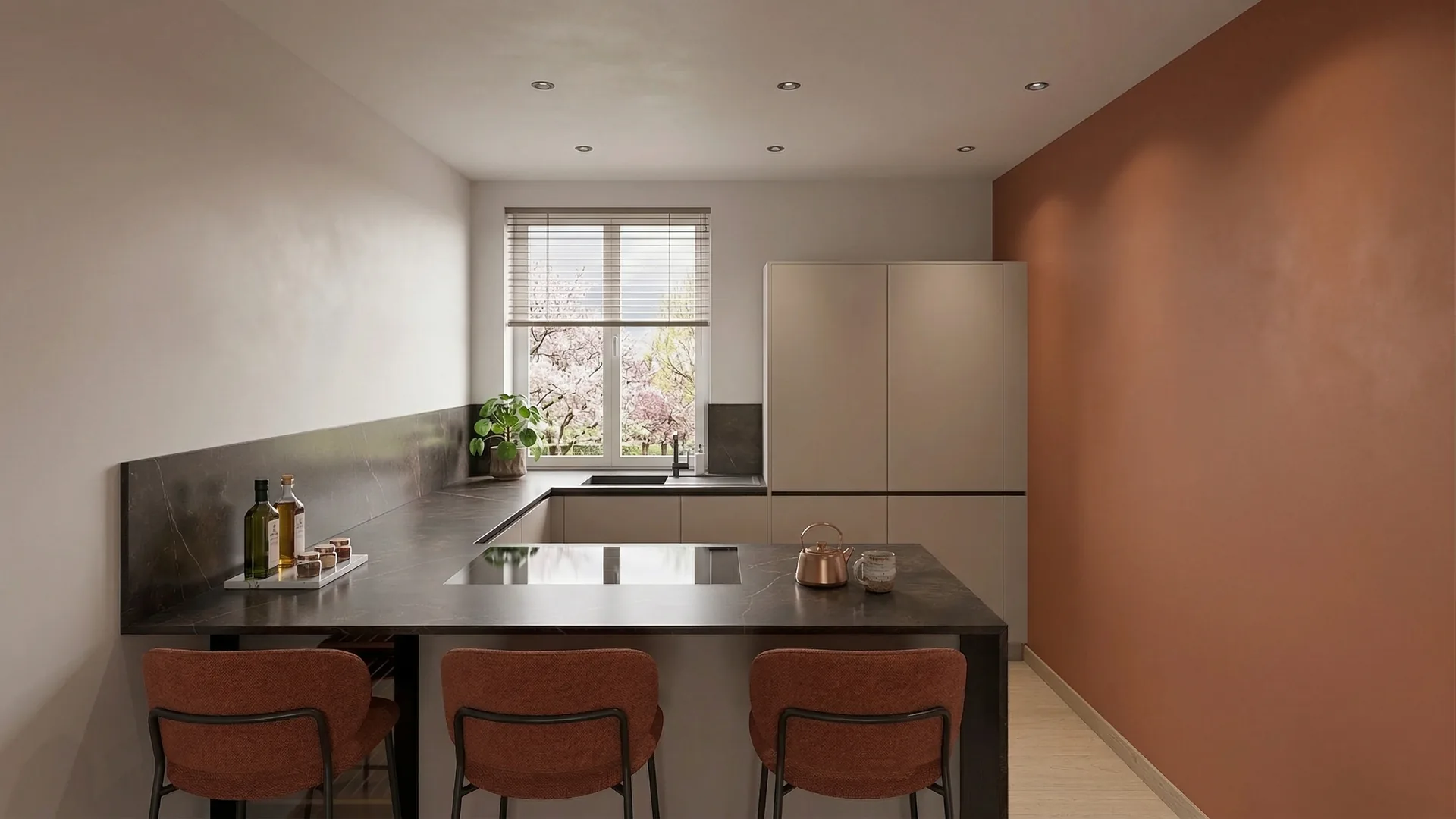
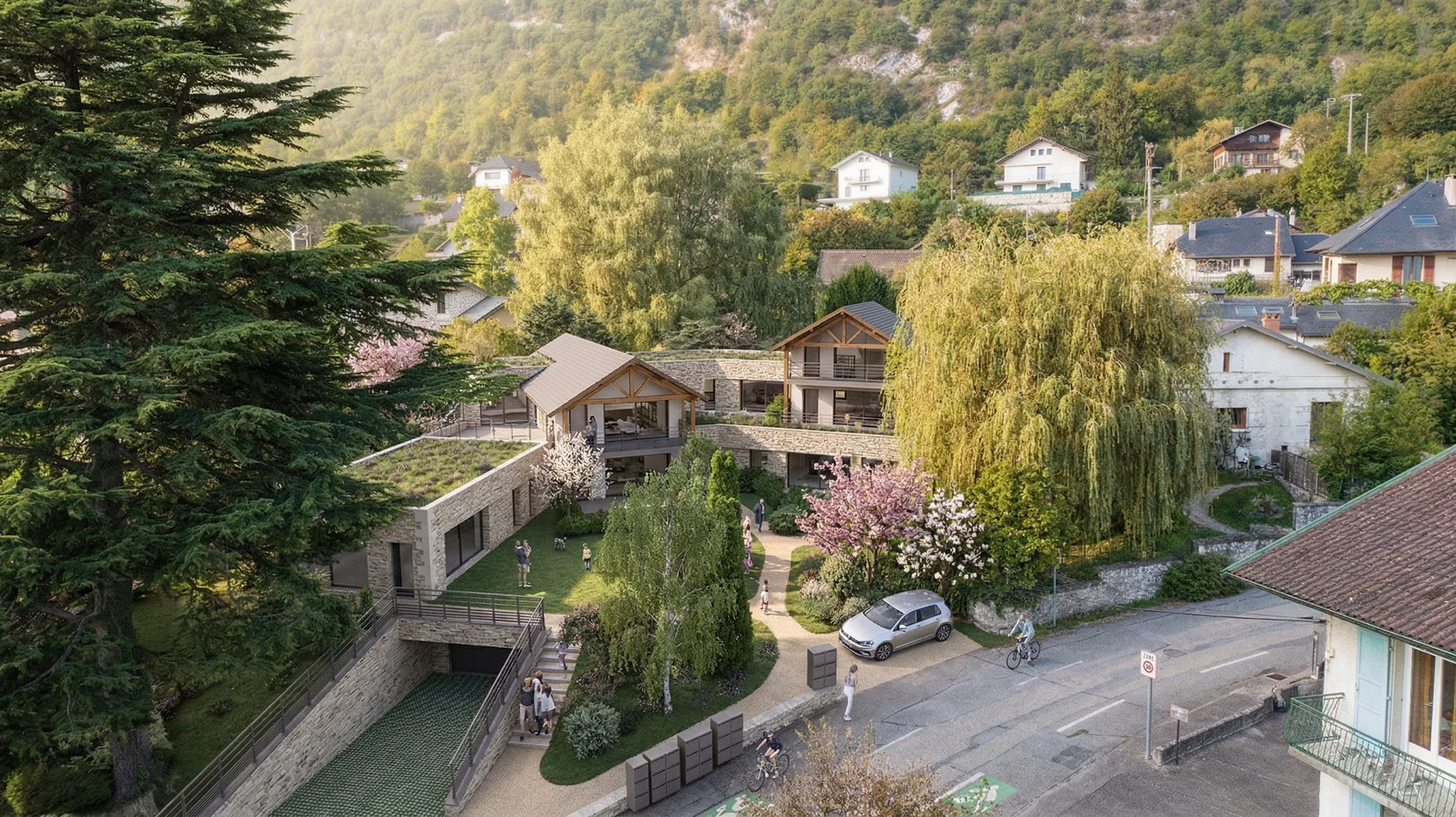
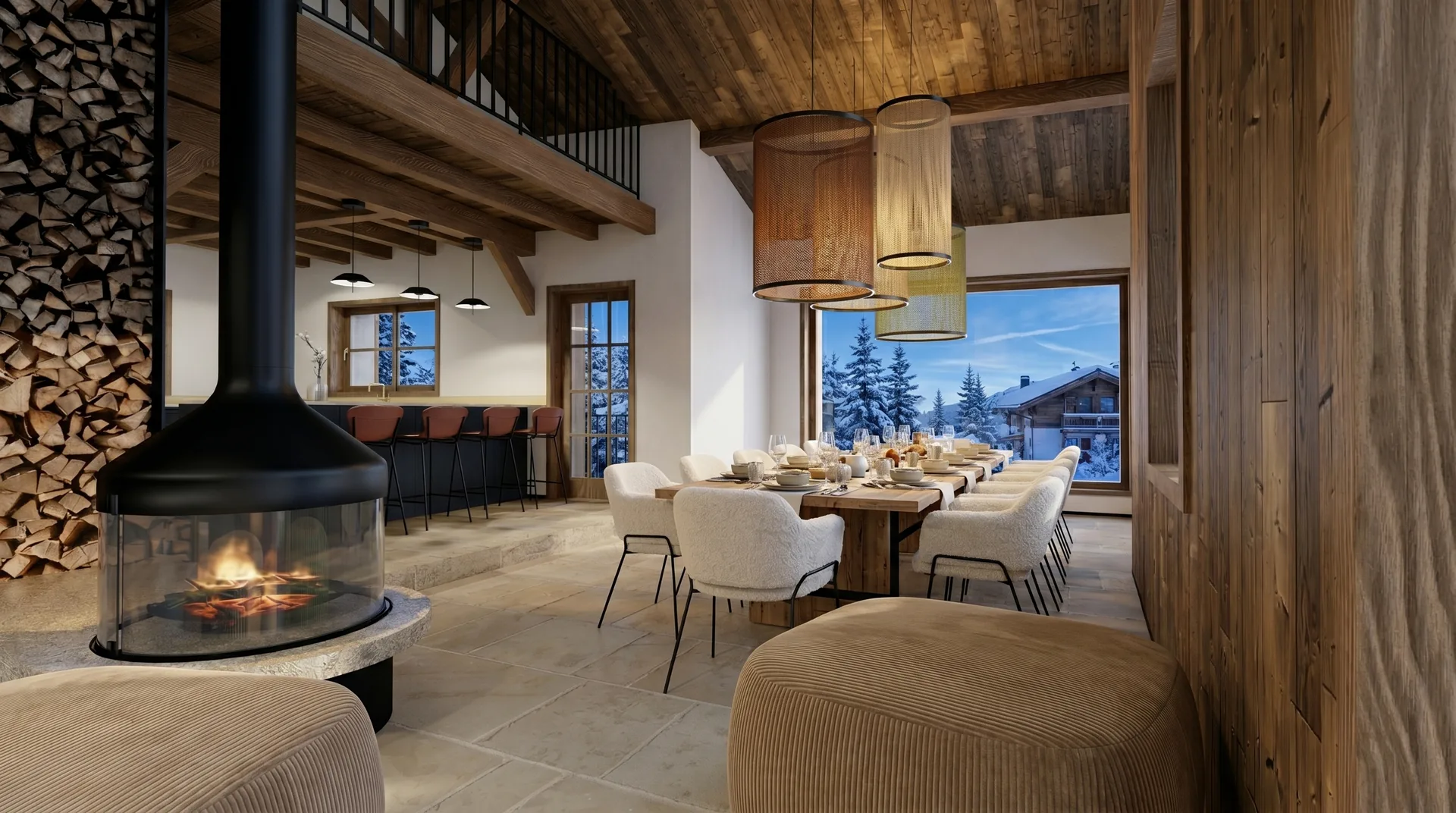
All projects →A few recent projects by our teams, from the shores of Lac du Bourget to the Val d'Arly.
How we choose the wool
A wall, a resistance to reach, a certified product: the choice is made in that order.
Survey of the wall
Available thickness, nature of the substrate, signs of moisture, services to integrate: the choice of wool starts from there.
Target resistance
We set the R to be reached according to the wall and the possible grants, then the resulting thickness.
Certified product
Exact reference, λ and R from the ACERMI certificate, bare or kraft version: everything appears on the quote.
Vapour and airtightness
Continuous vapour-control layer on the heated side, adhesives at the joints, duct penetrations treated one by one.
Summer as well as winter
Under an exposed roof, we compare dense rock wool with bio-based insulants.
Item-by-item pricing
Frame, insulant, membrane, plasterboard, joints: each line priced separately, comparable with another quote.
Find out more
- Sound insulation for a wall
- Insulating your unconverted attic
- Insulating your roof from the inside
- Insulating walls from the inside
- Insulating a ground floor
- Cost of plasterboard per m² installed
- Cost of a suspended ceiling per m²
- Which VAT rate for your works
- Our RGE CertiRénov certification
- Request a free quote
Where we insulate
Technical visit and insulation quote carried out from our offices in Aix-les-Bains and Annecy, across the two Savoie départements.
Frequently asked questions · Glass wool or rock wool
Glass or rock,
wall by wall.
Free visit and quote: we show you the reference, its certificate and its fitted price, wall by wall.