Cellulose
insulation.
Made from recycled newsprint, cellulose insulation is among the most sought-after insulants. It has real strengths — a loose fill that fits into every nook, a good capacity to store heat — and requirements that cannot be got around: a density to respect, settlement to allow for, a distance to keep from flues. Here is what the certified data sheets say, without a sales pitch.
What cellulose insulation really is
Cellulose insulation is paper — for the most part clean, sorted newsprint — reduced to flakes, to which mineral salts are added to improve its fire behaviour. On the data sheet for ISOCELL F cellulose (October 2025), these additives make up 10% of the product, including 3% boric acid. It is often said that they also protect it from insects and mould: this role depends on the formulation, and only the product's data sheet is authoritative.
The additives have a history, incidentally. The order of 21 June 2013 banned the manufacture and sale in France of cellulose containing ammonium salts, after CSTB tests showing that at high temperature and high humidity these salts can break down into ammonia. Some boards are now advertised as free of boron salts. The useful reflex does not change: ask for the data sheet and certificate of the product actually installed, not of a range in general.
In terms of performance, cellulose is not a miracle insulant. Its λ — 0.039 W/(m.K) blown, 0.041 injected on the ACERMI-certified data sheets we consulted — places it within the range of common insulants, which ADEME puts between 0.025 and 0.05. What sets it apart lies elsewhere: how it is installed, its mass and its behaviour with water vapour.
Blown, injected or in boards: four ways to install it
| Installation | Where | Density | λ in W/(m.K) | Standard |
|---|---|---|---|---|
| Blowing (loose fill in the open air) | Unconverted loft floor | 25 to 35 kg/m³ | 0,039 | NF DTU 45.11 |
| Injection (loose fill in a closed cavity) | Roof slopes, framed walls, floors | 50 to 60 kg/m³ | 0,041 | The product's technical approval (Avis technique) |
| Wet spraying | Walls, with the wall still open | 35 to 45 kg/m³ | 0,041 | The product's technical approval (Avis technique) |
| Semi-rigid board | Partitions, walls, roof slopes | 38 to 45 kg/m³ | 0,039 | The board's ACERMI certificate |
Blowing is the most widespread method: a machine projects the flakes into the open air onto the loft floor, up to the specified height. It assumes a loft that will not be converted, and careful preparation, detailed in our guide to insulating unconverted lofts.
Injection fills a closed cavity — a box between rafters, a wall frame, a floor — to a density nearly twice as high. It is this density that stops the cellulose from slumping down inside the wall over the years. It is specified and checked product by product, according to its technical approval (Avis technique).
Semi-rigid boards combine cellulose with other fibres. The one in Soprema's Univercell range, for example, contains 60% treated cellulose, completed with recycled cotton fibres and thermobonding polyester fibres that give it its stability, in thicknesses from 4.5 to 14 cm. They are fitted like any board insulant, without a machine.
What thickness for what thermal resistance
Thermal resistance is calculated simply: R = thickness ÷ λ. For blown cellulose, though, you have to think in terms of two thicknesses: the one that remains once the cellulose has settled, which determines the performance, and the greater one to be blown on the day of the work. Here are the values given on the ACERMI-certified data sheet for OUATTITUDE cellulose from Igloo France Cellulose (September 2024):
| Target resistance | Thickness after settlement | Minimum thickness to blow | 10 kg bags per 100 m² |
|---|---|---|---|
| R = 6 | 234 mm | 300 mm | 75 |
| R = 7 | 273 mm | 350 mm | 88 |
| R = 8 | 312 mm | 400 mm | 100 |
| R = 10 | 390 mm | 500 mm | 125 |
In an unconverted loft, R = 7 is the threshold to aim for: it is the requirement of CEE sheet BAR-EN-101, reduced to R = 6 for a roof slope. For another product, the thicknesses change; only its ACERMI certificate is authoritative.
With injection, there is no extra thickness: the cavity is filled completely. On the same data sheet, 165 mm injected gives R = 4 and 250 mm gives R = 6.05. Under a roof slope, it is therefore the height of the box — the section of the rafters or the framing that is added — that determines the resistance that can be reached.
Settlement: the three lines to demand on the quote
A loose-fill insulant laid in the open air settles. The data sheet cited allows for 20% settlement and a settlement class of SH25, and the thickness to blow already includes this loss: 350 mm blown for 273 mm of useful thickness at R = 7. The danger does not come from the expected settlement, but from blowing too lightly: below the prescribed density — 25 to 35 kg/m³ on the two data sheets consulted — the thickness shrinks further, and the thermal resistance with it.
A quote for blown cellulose should therefore always state: the target resistance with the product reference; the thickness to be blown, and not only the useful thickness; the number of bags planned. This last figure is the simplest check there is: for R = 7 over 100 m², the data sheet cited calls for at least 88. Height markers placed before blowing then make it possible to check the thickness.
Fire: a combustible insulant, to be kept at a distance
Once treated, cellulose resists fire better than paper, but it remains combustible: the data sheet cited classes it E for reaction to fire, as does the Univercell board. In a loft, this calls for three precautions.
Flues. They are separated from the cellulose by a non-combustible stop, at the safety distance set by NF DTU 24.1 according to the type of flue. We check it during the visit, flue by flue.
Recessed spotlights. A spotlight buried under the insulation heats up. It is protected by a suitable cover, or replaced by a light fitting designed to be covered, before blowing.
Junction boxes and cables. They are located and made accessible before installation, so that they do not disappear under 35 cm of flakes.
Moisture: an insulant that is very open to vapour
Cellulose lets water vapour through almost freely: the data sheet cited gives it a vapour diffusion resistance factor μ of 1, that of air. Manufacturers present it as a humidity regulator, but this openness never removes the need to manage the vapour produced in the home. On an attic floor, the vapour barrier goes on the heated side; in a wall, it is the product's technical approval (Avis technique) that specifies the vapour barrier or vapour-control layer to be combined with it.
Liquid water, for its part, forgives no loose-fill insulant: a roof leak is repaired before blowing, never after. In Savoie and Haute-Savoie, altitude adds an argument, since ADEME lists houses in the very cold zone among the cases where a vapour barrier is mandatory — we go into this in our guide to insulating your roof from the inside.
Summer comfort: what density changes
Cellulose is often credited with a good "time lag" (déphasage), meaning a delay in the heat passing through the wall. This delay depends on three quantities: conductivity, density and heat capacity. That of cellulose is high — 2.11 kJ/kg.K on the ISOCELL F data sheet — but the density depends entirely on the installation.
The calculation, from the data sheets cited: 350 mm blown at 25 kg/m³ represents about 8.8 kg of insulant per square metre, and 250 mm injected at 55 kg/m³ nearly 14 kg. Even if thinner, cellulose injected into a roof slope therefore stores more heat per square metre than cellulose blown into a loft. We do not publish a time-lag figure: the numbers in circulation vary with the thickness and density used, and under a roof, summer comfort also depends on the roof covering, the ventilation and the solar protection of the windows.
When we propose it, and when we rule it out
We have no favourite insulant: we choose the material according to the substrate, the wall and the project, after the visit. Cellulose insulation has its place in an unconverted loft accessible for blowing with no conversion planned, in a roof slope or timber-frame wall where a closed box is created for injection, and in projects where the client wants a recycled insulant, backed by an ACERMI certificate.
We replace it when the wall does not allow it to be protected properly: a roof that leaks and will not be redone, a wall where vapour cannot be controlled, hot spots so numerous that protecting them would become a job in itself. The choice is then made between the other families of insulants, case by case: our guide to which insulant to choose compares them.
Price and grants: what we can honestly say
Our 2024-2026 quotes contain no line for cellulose insulation: the blown insulation priced over this period was in glass wool. We therefore do not publish a price per square metre for cellulose. The cost of loft insulation depends as much on access, the hatch, the flues and the vapour barrier as on the insulant itself.
As for funding, cellulose follows the same rules as other insulants. VAT is 5.5% for the thermal insulation of a home completed more than two years ago, provided the regulatory technical characteristics are met — see our guide to VAT on building work. Energy savings certificates (CEE) remain available for a single measure, provided R ≥ 7 is reached in an unconverted loft. Since 1 September 2026, however, MaPrimeRénov' no longer funds insulation as a single measure, only within a major renovation: everything is explained in our update on MaPrimeRénov' 2026. These grants require an RGE contractor for the work concerned; our RGE CertiRénov certification (no. CR-2026-73-0095) covers the whole-home renovation offer.
Our projects around the lake
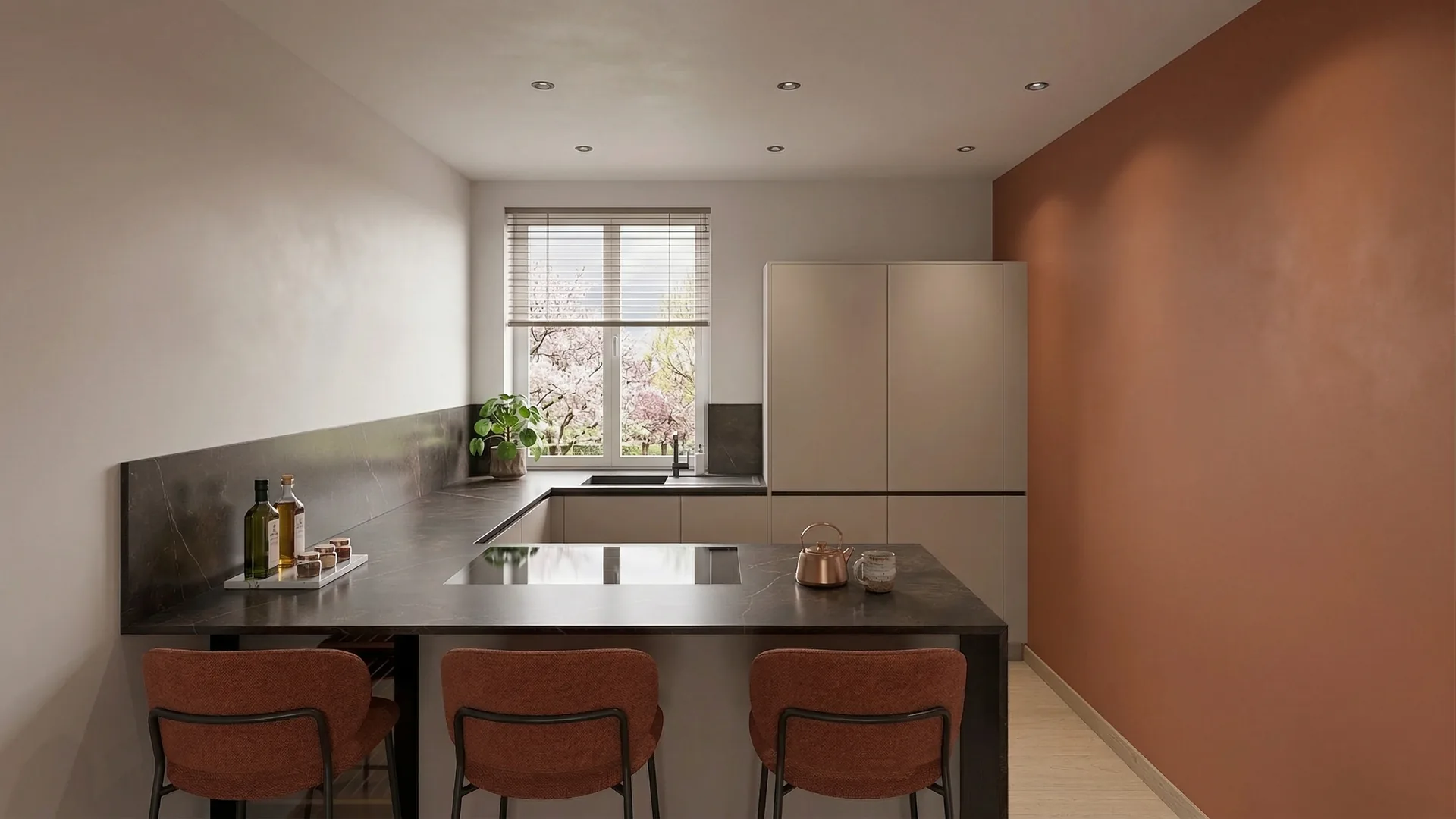
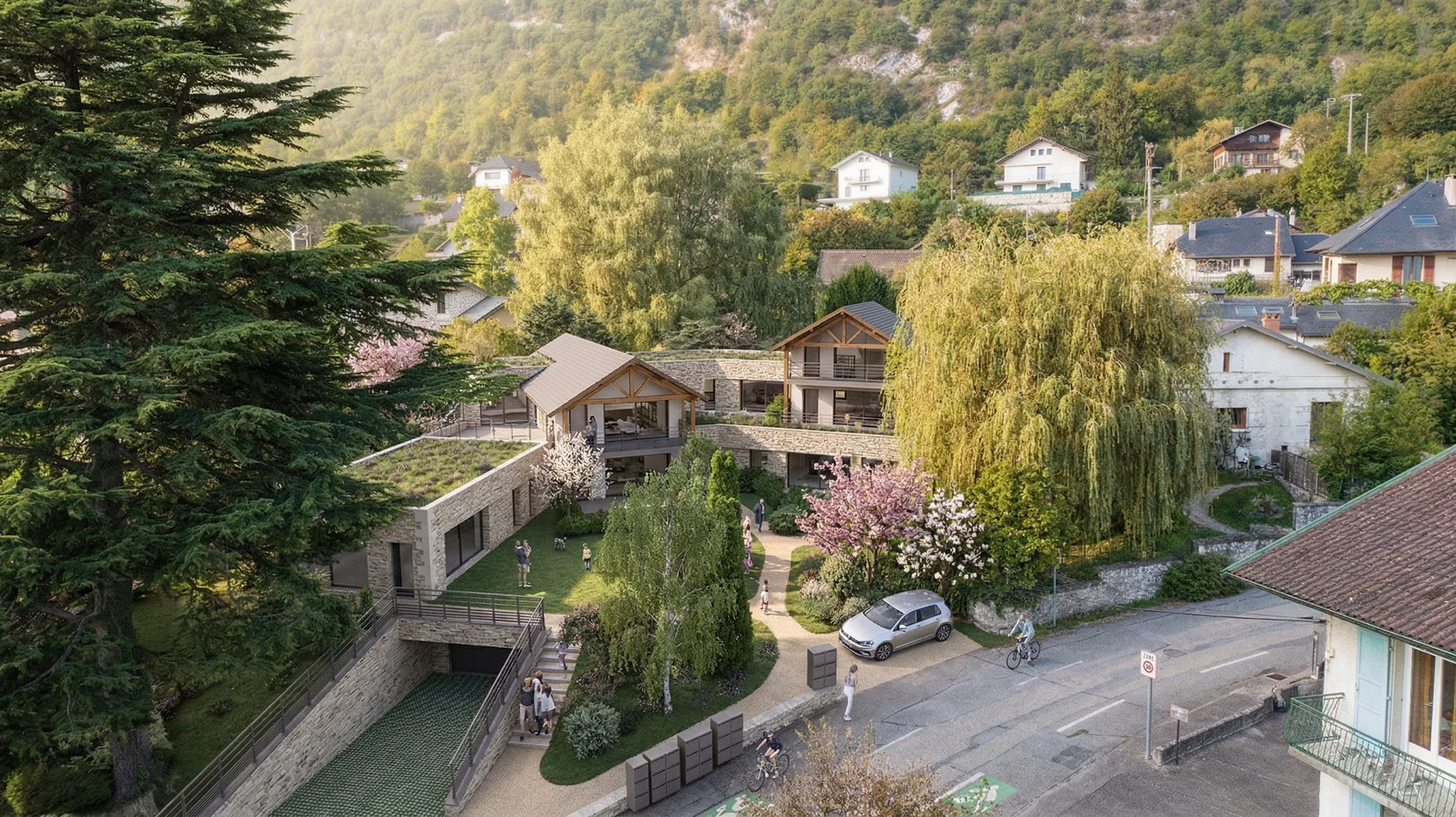
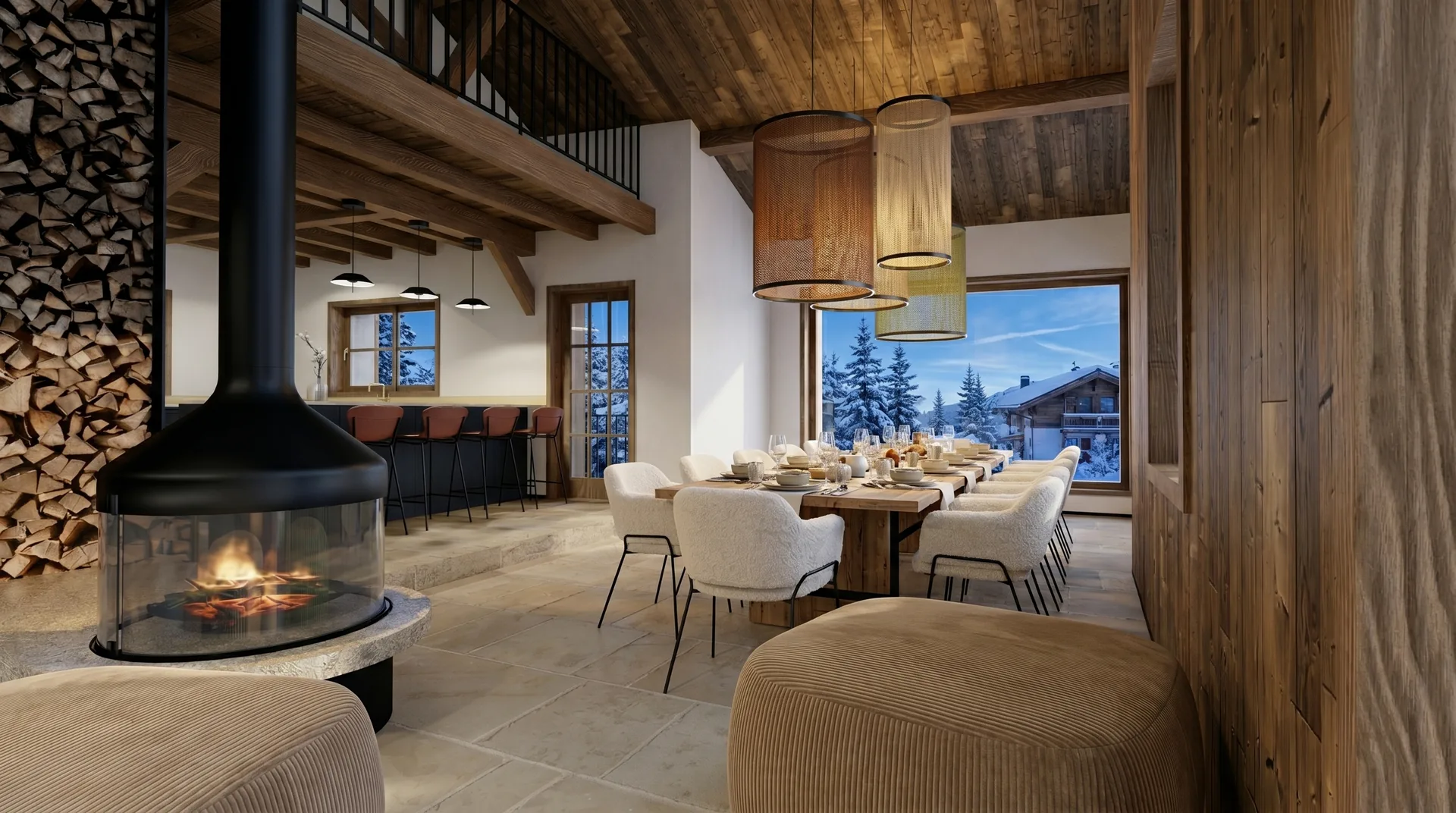
All projects →Renovation and construction: a few projects carried out by our teams, from Lac du Bourget to the Val d'Arly.
Our method, from the visit to the installation
The material comes after the wall: visit, survey, then a reasoned choice based on the data sheet. The preparation and installation are carried out by our own teams.
Visit to the wall
Access, condition of the roof, flues, spotlights, junction boxes, nature of the substrate: everything that governs the installation is checked on site.
Vapour management
Vapour barrier on the heated side, or vapour-control layer specified by the product's technical document, carefully connected to the adjoining walls.
Comparison on data sheets
Cellulose, mineral wool, wood fibre: we compare λ, thickness, mass and installation constraints on the certified data sheets.
Quantities in writing
Target resistance, thickness to blow or inject, number of bags: everything appears on the quote and can be checked.
Hot spots protected
Stops around flues, protection of spotlights, junction boxes located before any installation.
Thickness checked
Height markers placed before blowing, thickness measured at the end of the job, no estimating by eye.
Where we work
Visit and advice on choosing the insulant from our offices in Aix-les-Bains and Annecy, across the two Savoie départements.
Frequently asked questions · Cellulose insulation
The right insulant,
for your wall.
Free visit, choice of insulant and detailed quote: thickness, quantity and protections set out in black and white.