Polyurethane
insulation.
Of the insulation materials compared in our guide, polyurethane is the one that reaches a given resistance with the least thickness. That is its great strength, and almost the only reason to choose it: under a screed where every centimetre counts, on a flat roof, above a roof frame. Here are its performances taken from named data sheets, its limits and what it costs on our sites.
A rigid foam, sold in faced boards
Under the name polyurethane, there are two similar rigid foams: PUR and PIR (polyisocyanurate). The boards we consulted all fall under the same European standard, NF EN 13165, and carry a multilayer facing on each side, sometimes aluminised. This facing protects the foam and makes it impermeable to the gases it contains.
Each manufacturer offers its foam by use: a floor board does not have the same crush resistance or the same machining as a roof board. The product is therefore chosen according to the field of use written on its data sheet, not on the mere mention "polyurethane". There are also foams sprayed on site, under an Avis technique (technical approval); this guide deals with boards, the only ones that appear in our quotes.
λ and thickness: the values on the data sheets
Thermal resistance is calculated as R = thickness ÷ λ. With a λ of 0.022 W/(m·K), polyurethane needs about a third less thickness than a mineral wool at 0.032, and almost half as much as a cork or hemp at 0.040: these values are compared in our guide Thermal insulation: which to choose?
| Board consulted | Use stated on the data sheet | Declared λ, W/(m·K) | R by thickness, m²·K/W |
|---|---|---|---|
| TMS (Soprema, PU) | Floors: under screed, underfloor heating, slab | 0.028 at 21 mm, 0.025 at 25 mm, 0.023 at 30-35 mm, 0.022 from 40 to 160 mm | 0.75 at 21 mm; 1.85 to 7.40 from 40 to 160 mm |
| Efigreen Duo+ (Soprema, PIR) | Flat roofs, under the waterproofing | 0.023 at 30-35 mm, 0.022 from 40 to 160 mm | 1.80 to 7.25 from 40 to 160 mm |
| Efisarking (Soprema, PUR) | Pitched roofs, from the outside | 0,022 | 2.60 at 56 mm; 3.70 at 80 mm; 4.65 at 100 mm; 6.00 at 130 mm; 7.40 at 160 mm |
| Utherm Sarking K (Unilin, PIR) | Pitched roofs, lowland or mountain | 0.022 (ACERMI certificate 11/121/688) | 3.70 at 80 mm |
Two lessons. First, thin boards insulate less well per centimetre: the λ of the TMS goes from 0.022 to 0.028 under 25 mm. Second, the difference with other insulation materials is measured in centimetres gained: for a wall at R = 3.7, 80 mm of polyurethane against 12 cm of wool at 0.032; for a rafter slope at R = 6, 130 mm against 19 cm. Where those centimetres cost nothing, the advantage disappears.
Where our teams fit it
Under a screed or a slab. For a ground floor at R = 3, a little under 7 cm of polyurethane is needed, which is valuable when the height under doors is tight. The TMS data sheet covers installation under hydraulic screed or bonded tiling (NF DTU 52.10), under hydraulic underfloor heating (NF DTU 65.14) and under ground-bearing slabs, with an SC1a2Ch floor classification from 21 to 140 mm. It also claims an 18 dB gain in impact noise for 56 mm under screed. Thresholds and techniques are detailed in our guide to ground floor insulation.
On the underside of a slab. On the ceiling of a garage or a cellar, boards fixed under the slab insulate the room above without touching its floor. This is one of the two polyurethane items in our recent quotes: 80 mm, R = 3.70.
On a flat roof. A board such as the Efigreen Duo+ serves as a support for the waterproofing, laid loose under heavy protection; its data sheet states a compressive stress of CS(10\Y)200, against CS(10\Y)175 for the TMS floor board.
Above the rafters, as sarking. When the roof frame must remain visible or the height under the roof is tight, the boards are laid on a vapour barrier, with closed and bridged joints, then receive the sub-roof screen and screwed counter-battens, following the Efisarking application method. The Utherm Sarking K data sheet intends it for areas with strong climatic variations, in lowland as in mountain. The cost of the whole can be read in our guide price of sarking per m².
In small thicknesses. A window reveal, a wall return where 10 cm of wool cannot be fitted: a 20 mm board is enough to deal with the thermal bridge. This is the other item in our quotes.
Where we avoid it. In unconverted lofts, height is not lacking: blown wool does the job, see glass wool or rock wool. Against an old wall that takes up ground moisture, a vapour-closed foam stops the masonry from drying out: we prefer wood fibre or cellulose wadding, with a suitable vapour-control layer.
Its limits: fire, summer, water vapour
Fire. The three Soprema data sheets consulted declare a reaction to fire of "NPD", performance not determined; that of the Utherm Sarking K indicates a Euroclass F. Bare mineral wools, for their part, are classed A1. Fitted on the inside of a home, a combustible insulation must therefore be covered with a thermal barrier: article 16 of the order of 31 January 1986 requires it to withstand at least 15 minutes of standard fire in buildings of the 1st and 2nd family, and a detached house of one storey at most falls under the 1st family. Clearances around flues, set by standard NF DTU 24.1, are added to this.
Summer. What delays heat under a roof is the amount of heat the insulation can store, so above all its density. That of the foams consulted is around 32 kg/m³, whereas a rigid wood fibre board approaches 160 kg/m³. Under an exposed roof, polyurethane alone therefore contributes little against overheating. We do not credit it with a quantified time lag: the published values contradict each other.
Water vapour. The Utherm Sarking L Plus data sheet gives the foam an Sd value of 3.50 to 9.00 m, and the facings are airtight: the board behaves almost like a vapour barrier. This is an asset under a screed or a waterproofing membrane, a risk against a wall that has to dry towards the inside.
Origin. As our guide to the ground floor reminds us, ADEME classes polyurethane among the insulation materials derived from petrochemicals. Manufacturers publish their environmental declarations (FDES) on the INIES database: they should be requested for the exact product in the quote.
The price: what our quotes show
We reviewed our 2024-2026 quotes in Savoie and Haute-Savoie. The word "polyurethane" comes up often, but mostly for the finish of roof windows. It is the insulation fitted in only two quotes:
| Item | Board | Price recorded (excl. VAT, supplied and fitted) |
|---|---|---|
| Underside of a garage slab, 100 m², Aix-les-Bains (2025 estimate) | 80 mm, R = 3.70 | €60.80 per m² |
| 17 window reveals, Tresserve (2024) | 20 mm | €83 per reveal |
Two lines do not make a range: we therefore do not publish a "price per m² of polyurethane". Three other estimates for reworking a slab cite a "TMS-type" insulation of 80 to 120 mm, but their price covers the whole build-up, from demolition to concrete: it says nothing about the insulation alone. VAT depends on the nature of the works and of the home, as our guide to VAT on renovation work explains.
What makes the budget vary is less the foam than what surrounds it: removal of a floor or a roof covering, a screed or waterproofing to redo, thermal barrier, treatment of the joints. Our salaried plasterers, masons and carpenter-roofers fit these boards themselves, and the quote names the product, its thickness and its R.
Our projects around the lake
All projects →Three sites by our teams, from Lac du Bourget to the Val d'Arly: renovation, new build and chalet.
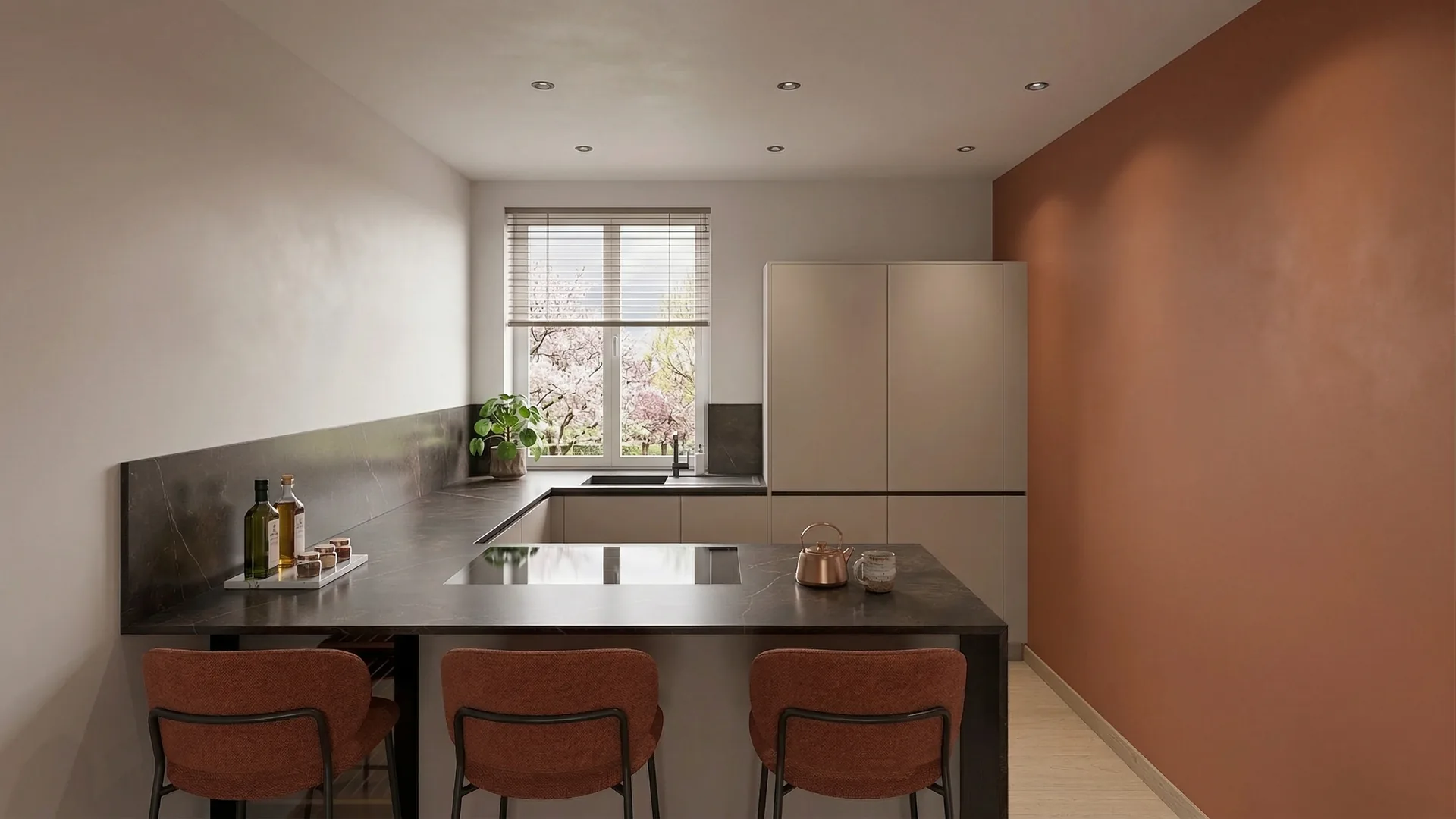
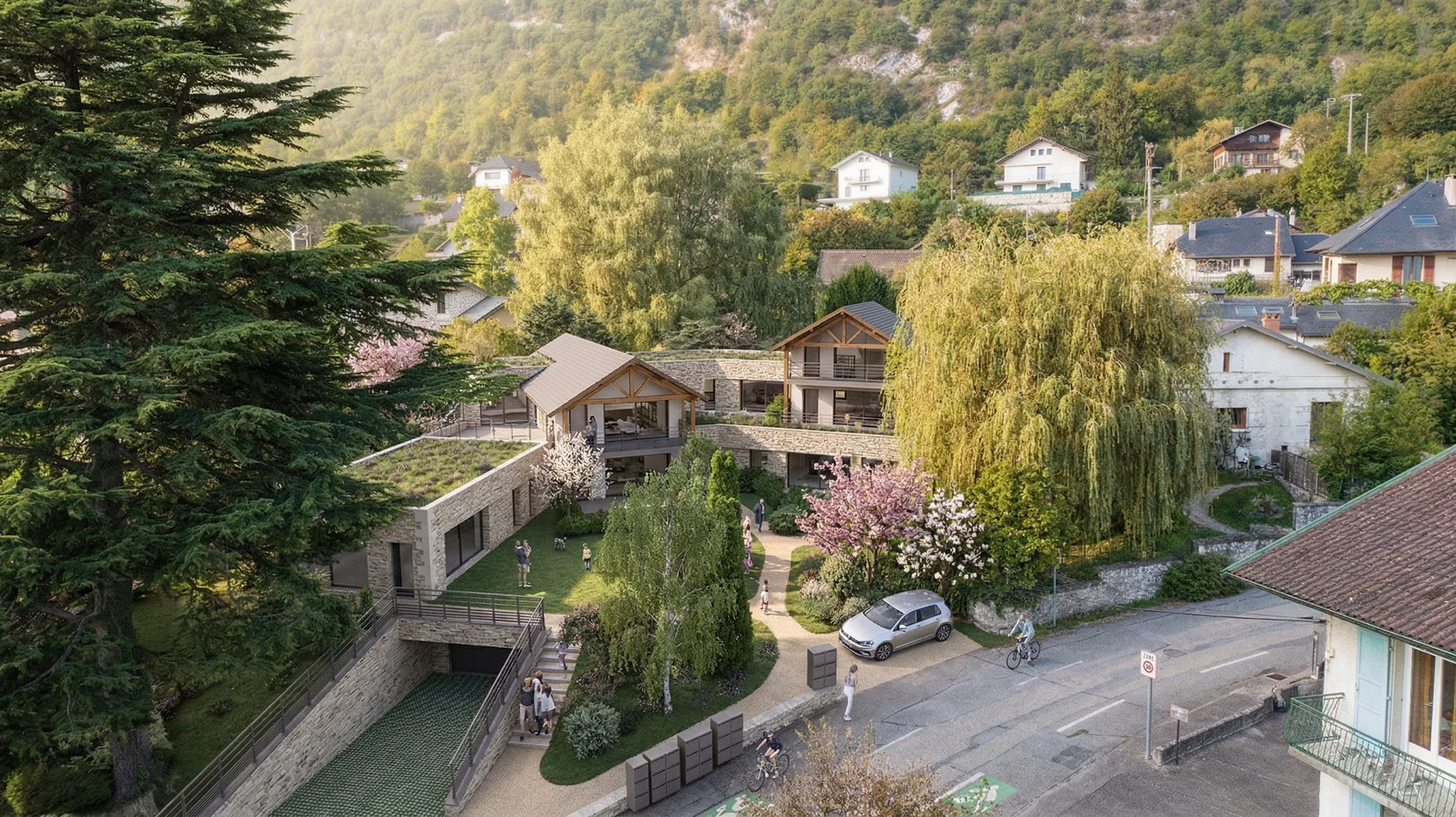
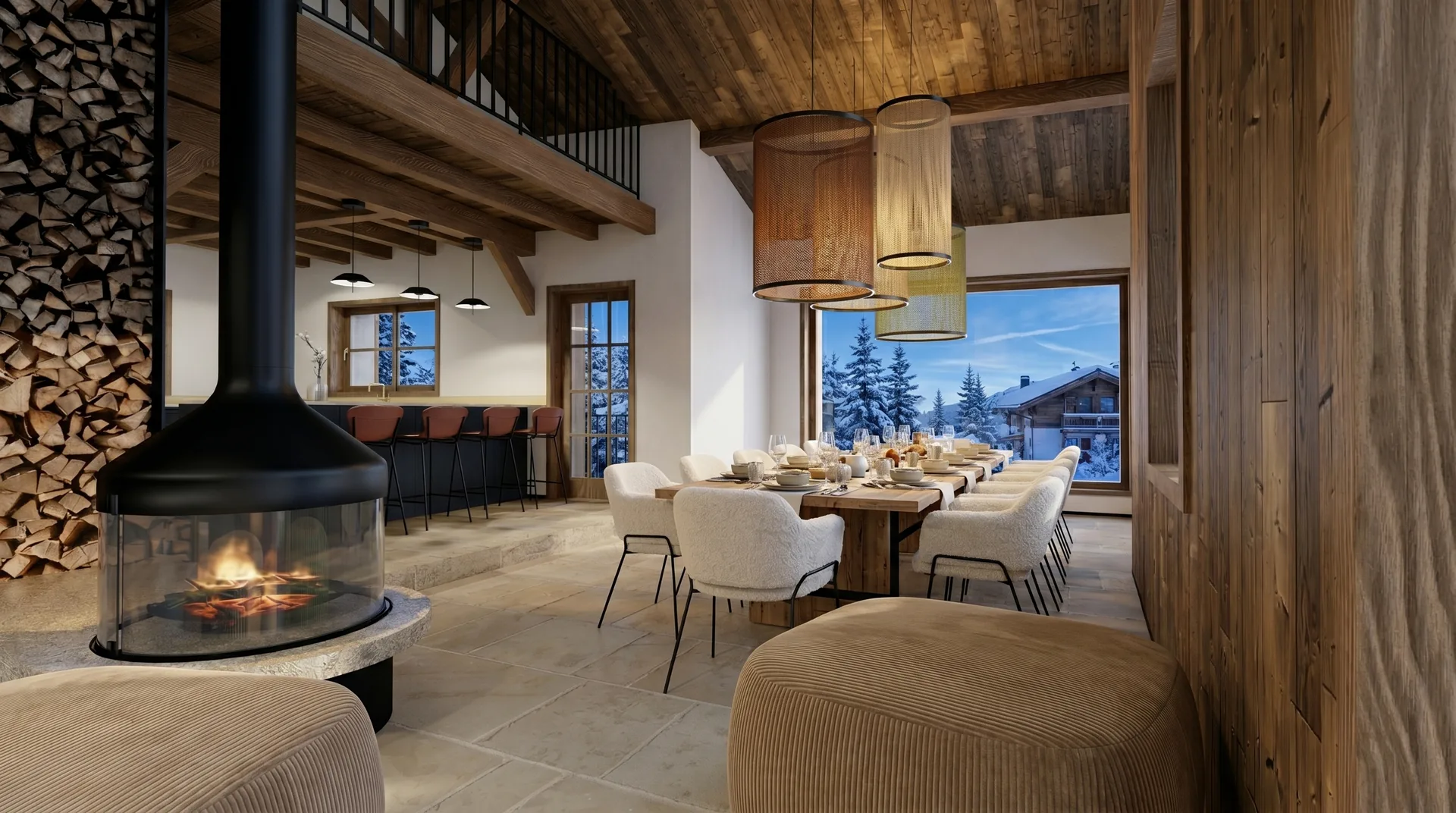
Fitting polyurethane by the book
A high-performance board that is badly fitted loses part of its value: everything is decided at the joints and the protections.
Height measured
Door thresholds, waterproofing upstands, ceiling height: we first check that the gain in thickness is really useful.
Board suited to the use
Floor, flat roof or sarking: a reference whose data sheet covers exactly the wall and the load planned.
Closed joints
Tongue-and-groove or butt-edge boards, joints bridged with adhesive tape: a gap is a thermal bridge.
Thermal barrier
On the side of the occupied room, a facing that protects the insulation for the time required by the fire regulations.
Clearances around flues
Distances from flues and hot spots set out in the quote, since the foam is combustible.
Installation by our teams
Our salaried plasterers, masons and carpenter-roofers fit the boards, each in their own trade.
Where we fit these boards
Floors, flat roofs and pitched roofs, throughout Savoie and Haute-Savoie, after a survey on site.
Frequently asked questions · Polyurethane insulation
Gain centimetres,
sacrifice nothing.
Free visit, thickness calculation and detailed quote: the board, its λ, its R and its protections written line by line.